Best Mesh WiFi Systems of 2026: End the Dead Zones

11 products reviewed and ranked ยท Last updated September 16, 2026

Best Overall
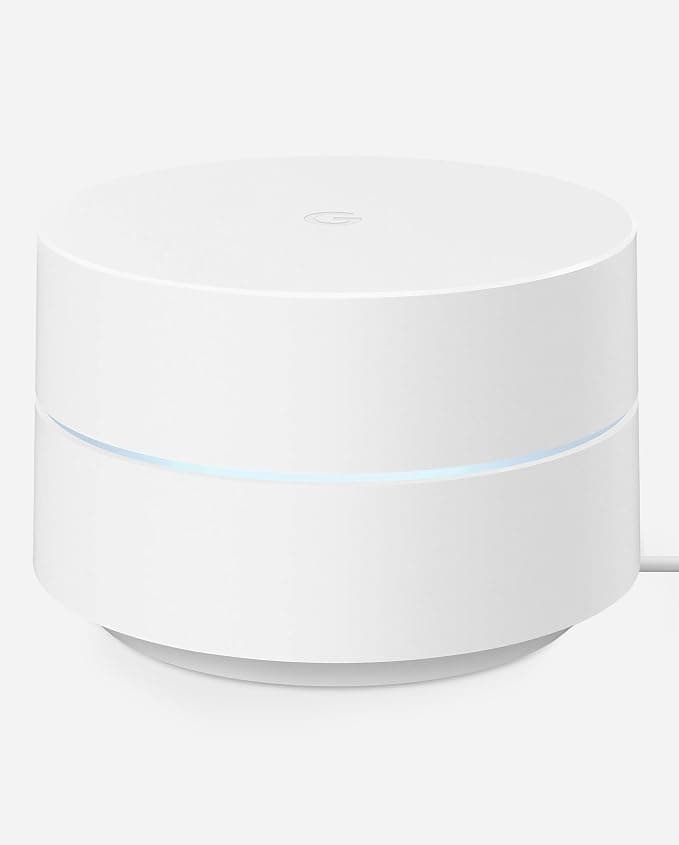
Google Wifi AC1200 Mesh WiFi System, 1,500 sq ft, 1-Pack
Google

Google Wifi AC1200 Mesh WiFi System, 1,500 sq f...

95/ 100
Check Price on Amazon
See full review โ†“
Runner Up
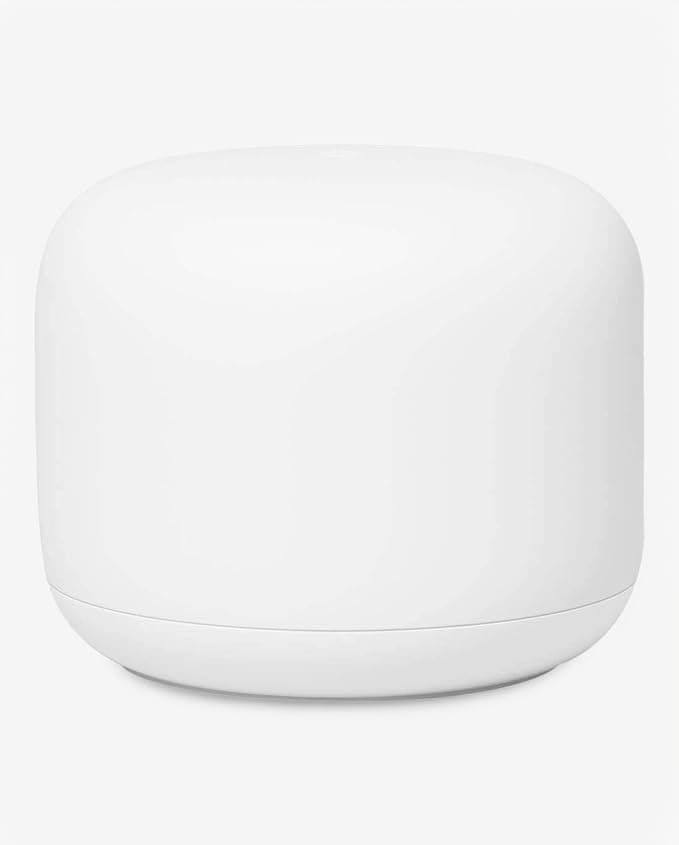
Google Nest Wifi AC2200 Mesh WiFi System, 2,200 sq ft, 1-Pack
Google

Google Nest Wifi AC2200 Mesh WiFi System, 2,200...

92/ 100
Check Price on Amazon
See full review โ†“
Great Pick
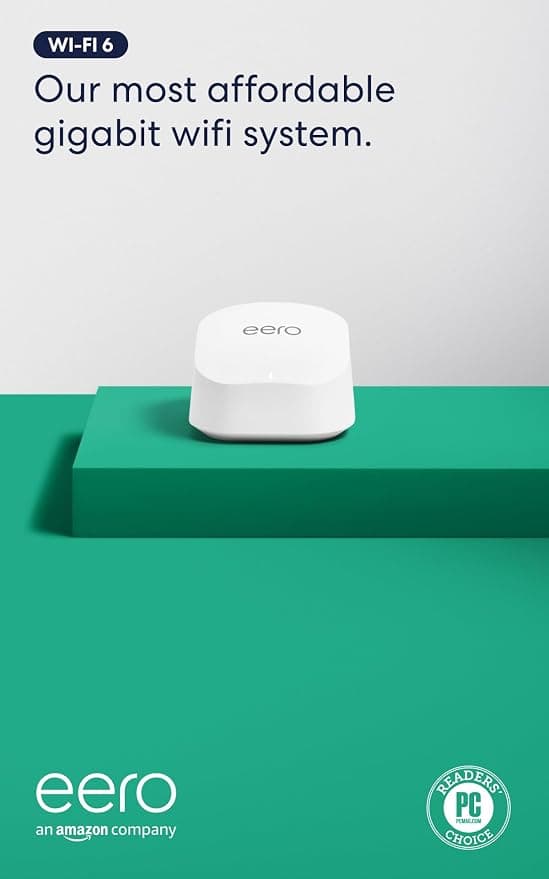
Amazon eero 6+ Mesh WiFi Router, Gigabit, 1,500 sq ft, 1-Pack
eero

Amazon eero 6+ Mesh WiFi Router, Gigabit, 1,500...

91/ 100
Check Price on Amazon
See full review โ†“

The dead zone in the back bedroom, the video call that freezes every time someone microwaves popcorn, the smart-home devices that drop offline for no obvious reason โ€” a single router pushing signal from one corner of the house is the root cause of most of it, and a mesh system is the fix that actually works rather than the range extender that mostly doesn't. Mesh systems place multiple nodes throughout the home that work together as one network, handing your devices off seamlessly as you move from room to room instead of forcing you to reconnect to a different network name.

Wi-Fi standard is the first spec worth understanding, because it sets the ceiling on real-world speed and how well the system handles a house full of devices. Wi-Fi 6 systems, like the TP-Link Deco X55 and Deco X15, are the mainstream sweet spot today โ€” fast enough for nearly every home, with mature hardware and lower prices than the newest standard. Wi-Fi 6E adds a dedicated 6 GHz band that newer devices can use, and models like the TP-Link Deco XE75 Pro use that extra band specifically as backhaul, keeping node-to-node traffic off the bands your phones and laptops are using. Wi-Fi 7, found on the newest eero 7 and NETGEAR Orbi systems, pushes speed and capacity further still, though most home internet plans won't fully saturate it yet โ€” it's more about future-proofing than an immediate necessity.

Coverage area and node count decide how much house you can actually blanket. Every kit lists a rated square footage, but that number assumes reasonably open floor plans โ€” thick walls, multiple floors, or unusual layouts will shrink real-world coverage, so it's worth sizing up rather than buying exactly to your home's square footage. A 3-pack system covers meaningfully more than a single unit and is the standard configuration for most 2,000-plus square foot homes; smaller apartments or single-floor homes can often get away with just one or two nodes.

Backhaul, the connection nodes use to talk to each other, matters more than most buyers realize. Wireless backhaul is simpler to set up but eats into the bandwidth available for your actual devices, while wired Ethernet backhaul between nodes โ€” supported by most systems here โ€” delivers meaningfully better performance if you're willing to run a cable. Device capacity is worth checking too if your home is full of smart plugs, cameras, and other IoT gadgets, since some entry-level systems cap out well before a heavily connected smart home does.

The mistake buyers make most often is chasing the newest Wi-Fi standard without checking whether their internet plan and devices can actually use it โ€” a Wi-Fi 7 system paired with a 300 Mbps internet plan and five-year-old phones won't outperform a well-placed Wi-Fi 6 system in any way you'd notice day to day. The second common mistake is buying a single-node system for a multi-story home and being surprised when the top floor still has weak signal; mesh systems earn their name by using multiple nodes, and a lone router is really just a router with better marketing.

We scored every system here on a weighted composite of customer ratings, review volume, price-to-coverage value, and how richly equipped each one is relative to the rest of the field. Budget-friendly systems score well when they deliver reliable whole-home coverage without excess; premium picks earn their place with Wi-Fi 7 speeds, tri-band architecture, or genuinely massive square footage ratings. Below, we break down all eleven, starting with the pick that balanced coverage, speed, and value best across the board.

As an Amazon Associate I earn from qualifying purchases. Prices and availability are accurate as of September 16, 2026 and are subject to change.

#1
95

Score

Google Wifi AC1200 Mesh WiFi System, 1,500 sq ft, 1-Pack
Best Overall
4.5(15,280)

Google's original Wifi system earns the top rank by pairing an extremely accessible price with a scalable design that genuinely grows with your home. One point replaces your existing router and covers up to 1,500 square feet, and adding more points expands coverage up to 4,500 square feet without buying a whole new system. The Google Home app handles setup in a few simple steps and includes parental controls that manage screen time and pause Wi-Fi to specific devices, useful for households with kids. It intelligently manages background traffic behind the scenes to keep streaming smooth, and its massive, overwhelmingly consistent reviewer base is the strongest evidence in this entire lineup that the design holds up across years of daily use.

Best for: Best overall value, with a scalable design and one of the most affordable entry points in this lineup.
One of the largest, most consistent reviewer bases in this entire lineup
Highly affordable single-point entry price
Scalable design expands coverage by adding more points later
AC1200 standard trails the Wi-Fi 6 and 7 systems ranked nearby
Single point tops out at 1,500 sq ft, needing expansion for larger homes
Fewer advanced networking features than the premium mesh systems here

Score Breakdown

Rating
88
Popularity
100
Value
100
Features
63
#2
92

Score

Google Nest Wifi AC2200 Mesh WiFi System, 2,200 sq ft, 1-Pack
Runner Up
4.4(12,513)

Google Nest Wifi steps up from the original Google Wifi with AC2200 dual-band performance and a larger 2,200 square foot coverage rating per single point, genuinely more capable out of the box without needing a multi-pack. It replaces a traditional standalone router entirely and is expandable by adding additional Nest Wifi points for larger homes, keeping the same simple Google Home app management. Its large, well-established reviewer base backs up years as one of the most recognized names in consumer mesh Wi-Fi. It trails the original Google Wifi mainly on value given its higher per-unit price for a similar core experience.

Best for: Best for buyers wanting more coverage per single unit than the original Google Wifi offers.
2,200 sq ft coverage per single point, more than the original Google Wifi
Large, well-established reviewer base
Simple Google Home app setup and management
Priced above the original Google Wifi for a similar core feature set
AC2200 still trails the Wi-Fi 6 and 7 standards in this lineup
Thin feature bullet list compared to more detailed competitors here

Score Breakdown

Rating
85
Popularity
98
Value
91
Features
50
#3
91

Score

Amazon eero 6+ Mesh WiFi Router, Gigabit, 1,500 sq ft, 1-Pack
Great Pick
4.4(10,530)

eero 6+ is the brand's entry point into gigabit-capable Wi-Fi 6, described by Amazon as its most affordable gigabit router, supporting speeds up to a gigabit with additional bandwidth unlocked on the 160 MHz radio channel for faster connectivity. Patented TrueMesh technology intelligently routes traffic to reduce drop-offs and dead spots, a real differentiator in how the mesh actually behaves under load rather than just the spec sheet. Setup takes minutes through the eero app, with full network management available remotely, and any single eero unit can work as a standalone gateway or extend an existing eero network. It carries one of the largest reviewer bases in this entire lineup, strong evidence the TrueMesh approach performs consistently in real homes.

Best for: Best for buyers who want Wi-Fi 6 gigabit speeds with the Amazon ecosystem and a proven track record.
One of the largest reviewer bases in this entire lineup
TrueMesh technology intelligently reduces drop-offs and dead spots
Sold as a single expandable unit, letting you scale gradually
1-pack sold separately from additional nodes, adding cost to expand
Wi-Fi 6 standard trails the newer Wi-Fi 7 eero and Orbi models here
1,500 sq ft single-unit coverage is modest versus 3-pack competitors

Score Breakdown

Rating
85
Popularity
96
Value
73
Features
63
#4
90

Score

TP-Link Deco X55 AX3000 WiFi 6 Mesh System, 3-Pack
4.4(13,229)

TP-Link's Deco X55 pushes further into Wi-Fi 6 territory than the entry-level Deco X15, rated at 2,402 Mbps on the 5GHz band plus 574 Mbps on 2.4GHz for genuinely faster real-world throughput. The 3-pack covers up to 6,500 square feet, among the largest coverage ratings in this lineup at its price point, and connects up to 150 devices with strong, reliable Wi-Fi. Three Gigabit Ethernet ports per unit support Wired Ethernet Backhaul for better node-to-node performance if you're willing to run cable, and any unit in the pack can serve as the primary router. It carries one of the largest reviewer bases in this entire lineup, backed by TP-Link's commitment to CISA's Secure-by-Design pledge.

Best for: Best mid-range pick for larger homes needing strong Wi-Fi 6 coverage and high device capacity.
6,500 sq ft coverage, among the largest ratings at this price point
One of the largest reviewer bases in this entire lineup
Supports up to 150 connected devices
Wi-Fi 6 standard trails the Wi-Fi 6E and 7 systems ranked nearby
Priced above the entry-level Deco X15 for the coverage upgrade
No dedicated 6 GHz backhaul band like the XE75 Pro offers

Score Breakdown

Rating
85
Popularity
99
Value
64
Features
63
#5
90

Score

TP-Link Deco X15 Dual-Band AX1500 WiFi 6 Mesh System, 3-Pack
4.4(923)

The Deco X15 is TP-Link's entry point into this lineup's Wi-Fi 6 tier, rated at 1,201 Mbps on 5GHz and 300 Mbps on 2.4GHz, a real step up from AC-class systems while staying at a genuinely accessible price. The 3-pack covers up to 5,600 square feet, eliminating dead zones more effectively than a traditional Wi-Fi booster or range extender, and supports up to 120 devices across its two bands with dynamic backhaul. Two Gigabit Ethernet ports per unit, six total across the pack, support Wired Ethernet Backhaul for better performance, and TP-Link's Secure-by-Design pledge carries over from the brand's other models here. It's the most affordable Wi-Fi 6 system in this entire lineup, trading some throughput ceiling for that lower price.

Best for: Best budget entry into Wi-Fi 6 mesh coverage for a large home.
Most affordable Wi-Fi 6 system in this entire lineup
5,600 sq ft coverage for the price
Supports Wired Ethernet Backhaul across six total Gigabit ports
1,201 Mbps top speed trails the faster Deco X55 in this lineup
120-device capacity is lower than the X55's 150-device rating
Smaller reviewer base than the more established Google and eero options here

Score Breakdown

Rating
85
Popularity
71
Value
82
Features
63
#6
86

Score

Amazon eero 7 Dual-Band Mesh WiFi 7 Router, 2,000 sq ft
4.4(2,159)

eero 7 is described by Amazon as the brand's most affordable Wi-Fi 7 router, a genuine entry point into the newest wireless standard without jumping to the tri-band Pro tier. It minimizes network disruptions for fast, reliable Wi-Fi in every room, and supports internet plans up to 2.5 Gbps through two auto-sensing 2.5 GbE ports with wireless speeds up to 1.8 Gbps. A single unit supports 120-plus devices and 2,000 square feet of coverage, and it's backward compatible with all previous eero generations plus eero Built-in on select Amazon Echo devices. Its rank here reflects genuine Wi-Fi 7 future-proofing offset by a smaller reviewer base than the brand's more established 6+ model, since this is a newer release.

Best for: Best affordable entry into Wi-Fi 7 for buyers who want to future-proof without going tri-band.
Most affordable Wi-Fi 7 router in this entire lineup
Supports internet plans up to 2.5 Gbps with dual 2.5 GbE ports
Backward compatible with all previous eero generations
Smaller reviewer base than the brand's more established 6+ model
Dual-band design trails the tri-band Pro 7 and Orbi systems in raw capacity
2,000 sq ft single-unit coverage requires multiple units for larger homes

Score Breakdown

Rating
85
Popularity
80
Value
45
Features
63
#7
85

Score

TP-Link Deco XE75 Pro AXE5400 Tri-Band WiFi 6E Mesh System, 3-Pack
4.3(3,290)

The Deco XE75 Pro is TP-Link's Wi-Fi 6E flagship in this lineup, covering up to 7,200 square feet with next-gen seamless coverage across three bands. Its dedicated 6 GHz band works specifically as backhaul by default, keeping node-to-node traffic off the bands your devices actually use โ€” a real architectural advantage over dual-band systems. One 2.5 Gbps WAN/LAN port plus two 1 Gbps LAN ports per unit support multi-gig internet plans, and total bandwidth of 5,400 Mbps across three bands handles 200 devices. TP-Link's Secure-by-Design commitment carries over from the brand's other models, and it ranks in the upper-middle of this lineup, held back mainly by pricing relative to the Wi-Fi 6 Deco models below it.

Best for: Best for buyers who want Wi-Fi 6E's dedicated 6 GHz backhaul and maximum device capacity.
Dedicated 6 GHz band works as backhaul, keeping client bands free
7,200 sq ft coverage, among the largest in this entire lineup
Supports up to 200 connected devices across three bands
Priced well above the Wi-Fi 6 Deco X15 and X55 models in this lineup
Wi-Fi 6E trails the newest Wi-Fi 7 systems in raw future-proofing
Rating trails the top-ranked systems here slightly

Score Breakdown

Rating
83
Popularity
84
Value
36
Features
63
#8
83

Score

Google WiFi AC1200 Mesh Router System Bundle, 4,500 sq ft, 3-Pack
4.2(127)

Google's WiFi bundle packages three AC1200 routers in one box for a clean, elevated whole-home setup, covering up to 4,500 square feet with no dead zones or drop-offs across a mid-sized home. Setup runs through the same simple Google Home app as the brand's other systems, with parental controls and guest network creation available from your smartphone. It intelligently manages background traffic to keep streaming speeds consistent, and Google backs the purchase with a 30-day return guarantee, real reassurance for a first-time mesh buyer. Its composite score reflects a smaller reviewer base than the single-unit Google Wifi and Nest Wifi models ranked above it, since this specific bundle is a newer retail packaging.

Best for: Best all-in-one 3-pack bundle for a mid-sized home wanting Google's ecosystem out of the box.
Complete 3-pack bundle covers 4,500 sq ft out of the box
Backed by a 30-day return guarantee
Simple Google Home app setup with parental controls
Smaller reviewer base than Google's single-unit Wifi and Nest Wifi models
AC1200 standard trails the Wi-Fi 6 and 7 systems in this lineup
Priced close to Wi-Fi 6 competitors offering more throughput

Score Breakdown

Rating
80
Popularity
50
Value
55
Features
63
#9
81

Score

Amazon eero Pro 7 Tri-Band Mesh WiFi 7 Router, 6,000 sq ft, 3-Pack
4.4(1,471)

eero Pro 7 is the tri-band flagship of the eero lineup, built for home and small-business networks with genuinely high bandwidth needs. It helps eliminate dead spots across different floors and rooms, and supports internet plans up to 5 Gbps through two auto-sensing 5 GbE ports with wireless speeds up to 3.9 Gbps. Three units in the pack support 600-plus devices and 6,000 square feet of coverage, among the highest device and area ratings in this entire lineup, and it remains backward compatible with all previous eero generations. Its rank here reflects a genuinely premium price relative to the rest of the field rather than any shortfall in raw capability.

Best for: Best for large homes or small businesses that need maximum device capacity and multi-gig speeds.
Supports 600-plus devices and 6,000 sq ft, among the highest in this lineup
5 Gbps internet plan support via dual 5 GbE ports
Tri-band architecture for maximum bandwidth headroom
Priced well above every other system in this entire lineup
Overkill capacity for typical single-family homes
Rating trails the top-ranked budget and mid-tier systems here

Score Breakdown

Rating
85
Popularity
76
Value
9
Features
63
#10
81

Score

NETGEAR Orbi 370 Series WiFi 7 Mesh System, 6,000 sq ft, 3-Pack
4.1(537)

NETGEAR's Orbi 370 brings Wi-Fi 7 to a mid-tier price point, with the router plus satellites blanketing up to 6,000 square feet with no dead zones from the front door to the backyard and basement. Dual-band technology with Enhanced Backhaul helps deliver faster Wi-Fi across every device simultaneously, and speeds up to 5 Gbps run 2.4 times faster than Wi-Fi 6 for demanding uses like 8K streaming and VR. The Orbi app guides step-by-step setup, then lets you manage devices and guest Wi-Fi remotely, and it's compatible with any cable or fiber ISP equipment for plans up to 2.5 Gbps. Its rank reflects genuine Wi-Fi 7 capability offset by a smaller reviewer base than the more established eero and Google systems in this lineup.

Best for: Best mid-tier Wi-Fi 7 system for buyers who want NETGEAR's Orbi ecosystem at a lower entry price.
Wi-Fi 7 speeds up to 5 Gbps, 2.4x faster than Wi-Fi 6
6,000 sq ft coverage across the 3-pack
Compatible with any cable or fiber ISP equipment
Smaller reviewer base than the established eero and Google systems here
Dual-band architecture trails the tri-band Orbi 770 and eero Pro 7
Priced above comparable Wi-Fi 6 systems with similar coverage

Score Breakdown

Rating
78
Popularity
65
Value
27
Features
63
#11
80

Score

NETGEAR Orbi 770 Series WiFi 7 Mesh System, 8,000 sq ft, 3-Pack
4.1(945)

The Orbi 770 is NETGEAR's flagship in this lineup, with the router plus satellites blanketing up to 8,000 square feet, the largest coverage rating of any system here. Tri-band technology with Enhanced Backhaul keeps Wi-Fi fast across every device simultaneously, and speeds up to 11 Gbps make it the fastest-rated system in this entire lineup, built for 8K streaming, gaming, VR, and video calls all at once. The same guided Orbi app setup and remote management carry over from the 370 series, and it's compatible with any cable or fiber ISP equipment for plans up to 2.5 Gbps. It ranks last on composite score purely because of price relative to the rest of this field, not because of any shortfall in raw capability.

Best for: Best for the largest homes needing maximum coverage and the fastest available speeds.
8,000 sq ft coverage, the largest rating in this entire lineup
Up to 11 Gbps speeds, the fastest-rated system here
Tri-band architecture with Enhanced Backhaul for simultaneous device load
Priced among the highest in this entire lineup
Overkill capacity and speed for typical single-family homes
Smaller reviewer base than the established eero and Google systems here

Score Breakdown

Rating
78
Popularity
71
Value
18
Features
63

Head-to-Head Comparisons

Trying to choose between the top picks? Read our direct comparisons.