Best 3D Printers 2026: Desktop Models That Actually Work

10 products reviewed and ranked · Last updated May 3, 2026

Best Overall
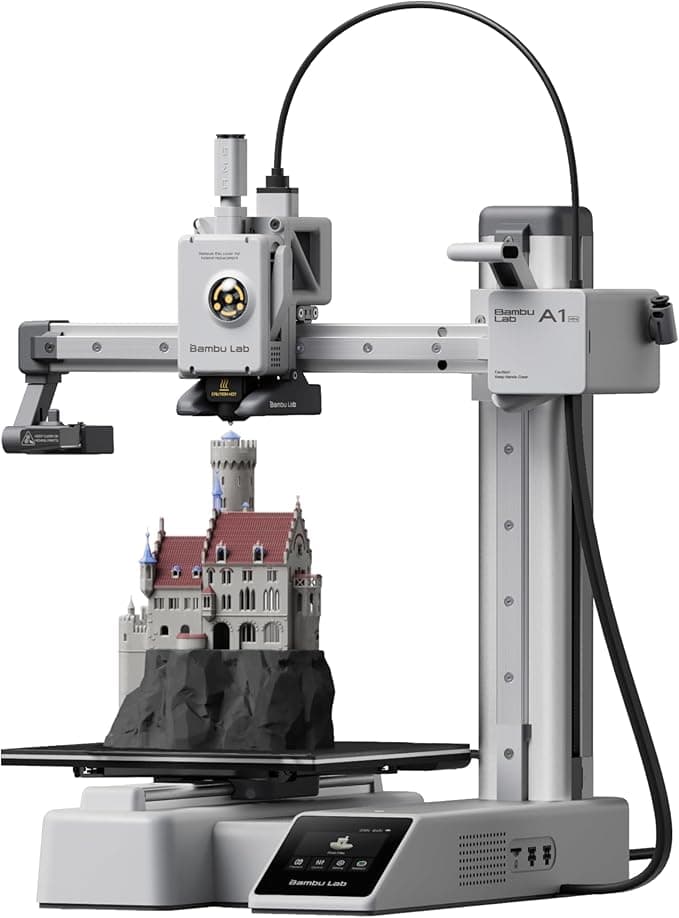
Bambu Lab A1 Mini 3D Printer with Multi-Color AMS Support, 20-Minute Setup, and Quiet FDM Operation
Bambu Lab

Bambu Lab A1 Mini 3D Printer with Multi-Color A...

95/ 100
Check Price on Amazon
See full review ↓
Runner Up
FLASHFORGE Adventurer 5M 3D Printer with 600mm/s CoreXY Speed and Fully Auto Leveling
Flashforge

FLASHFORGE Adventurer 5M 3D Printer with 600mm/...

91/ 100
Check Price on Amazon
See full review ↓
Great Pick
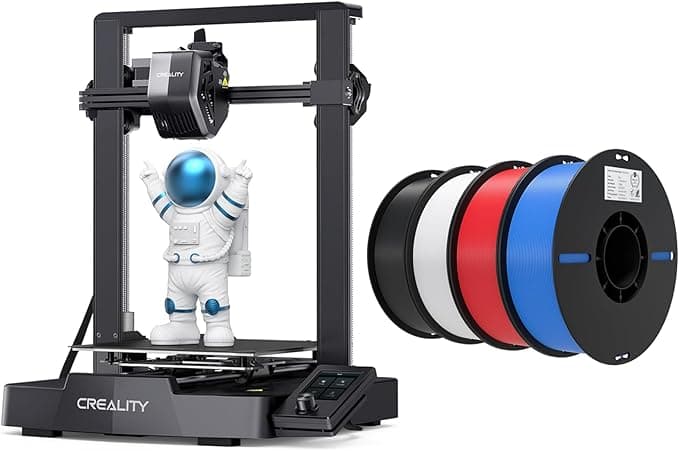
Creality Ender 3 V3 SE 3D Printer Bundle with 4-Pack PLA Filament
Creality

Creality Ender 3 V3 SE 3D Printer Bundle with 4...

88/ 100
Check Price on Amazon
See full review ↓

Best 3D Printers 2026: Desktop Models That Actually Deliver

Whether you're finally ready to turn those digital designs into physical objects or you've been burned by a cheap printer that turned every project into a frustrating ordeal, finding the right 3D printer in 2026 means cutting through the marketing hype to focus on what actually matters for your workspace.

The desktop 3D printer market has matured significantly, but the fundamental choice remains: FDM (filament) printers for general-purpose printing, or resin printers for ultra-fine detail work. Most makers start with FDM since it's more versatile and less messy, while resin excels for miniatures, jewelry, and precision parts.

Print Volume and Build Quality Matter More Than Speed Claims

Print volume determines what you can actually make. A 180mm³ build area handles most hobby projects, while larger volumes around 250mm³ open up functional parts and multi-piece assemblies. Don't get caught up in speed marketing—models like the FLASHFORGE Adventurer 5M claim impressive 600mm/s speeds, but real-world quality printing typically happens at 50-100mm/s regardless of the machine's theoretical limits.

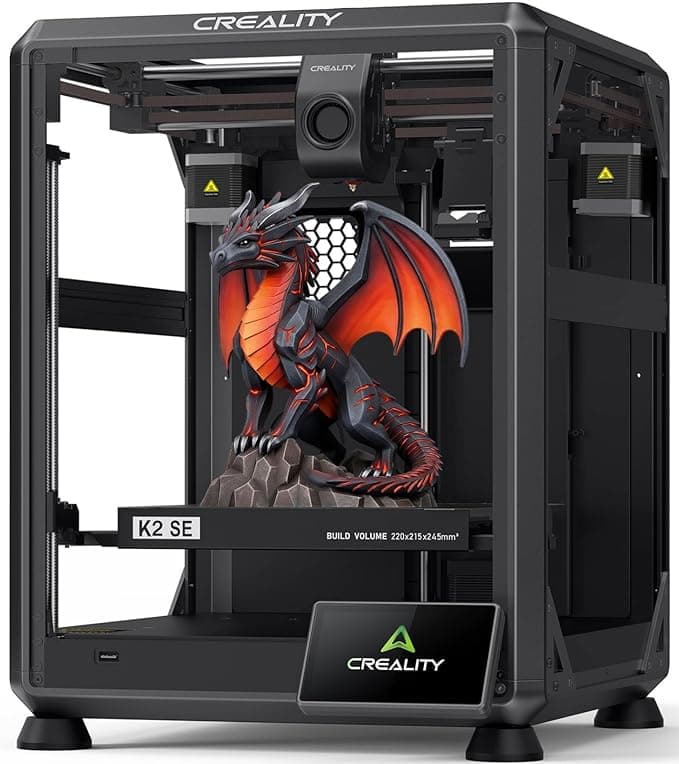
Build quality trumps speed every time. CoreXY motion systems, found in printers like the Creality K2 SE, provide better precision than basic Cartesian designs, especially for larger prints.

Auto-Leveling Isn't Optional Anymore

Manual bed leveling was the bane of early 3D printing, and frankly, life's too short to mess with thumbscrews every few prints. Quality auto-leveling systems, like those in the Bambu Lab A1 Mini, probe multiple points and adjust on the fly. This isn't just convenience—it directly impacts first-layer adhesion and overall print success rates.

Filament Compatibility Defines Your Project Range

PLA works for most beginners, but you'll quickly want PETG for durability and ABS for heat resistance. Higher-end nozzles reaching 300°C+ unlock engineering materials, while all-metal hotends handle abrasive filaments. The ELEGOO Centauri Carbon with its 320°C capability opens up advanced material options that budget printers simply can't handle.

Enclosed vs. Open Frame: More Than Just Safety

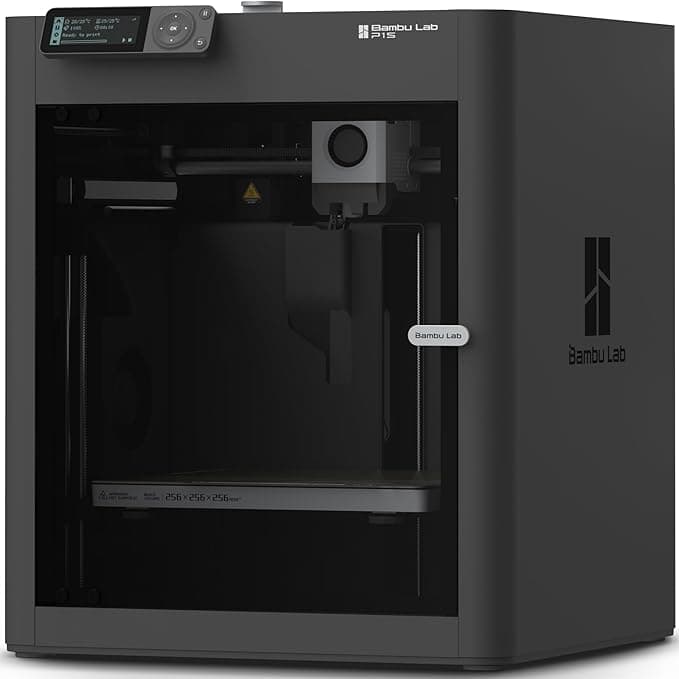
Enclosed printers like the Bambu Lab P1S aren't just safer—they maintain consistent temperatures crucial for ABS and other temperamental materials. Open-frame designs work fine for PLA but struggle with warping-prone filaments. Consider your intended materials when choosing.

The Resin Alternative for Detail Work

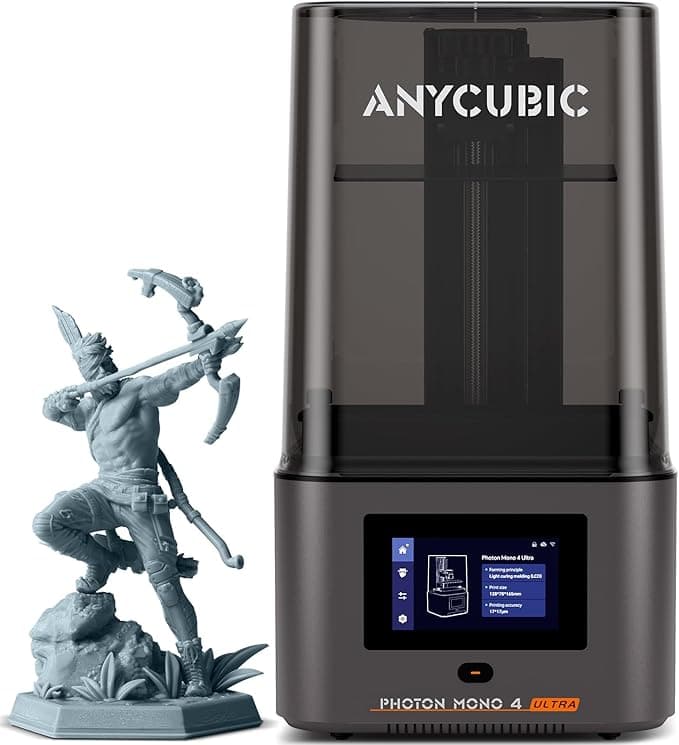
If your projects demand ultra-fine details—think tabletop miniatures or jewelry prototypes—LCD resin printers like the ANYCUBIC Photon Mono 4 Ultra deliver resolution that FDM simply cannot match. The trade-offs include toxic fumes, messy post-processing, and higher consumable costs.

Common Buying Mistakes

Many buyers focus solely on build volume or speed while ignoring reliability factors. A printer that fails mid-print wastes more time than a slightly slower but dependable machine. Similarly, "beginner-friendly" often means feature-limited—if you're serious about the hobby, don't artificially limit yourself with an overly simplified printer.

Our rankings use a weighted composite scoring system that evaluates user ratings, feature sets, value proposition, review volume, and product recency to identify the most compelling options across different budgets and use cases.

Below, we've ranked the top desktop 3D printers of 2026, from budget-conscious options that don't sacrifice core functionality to premium machines that push the boundaries of what's possible on your desktop.

As an Amazon Associate I earn from qualifying purchases. Prices and availability are accurate as of May 3, 2026 and are subject to change.

#1
95

Score

Bambu Lab A1 Mini 3D Printer with Multi-Color AMS Support, 20-Minute Setup, and Quiet FDM Operation
Best Overall
4.7(1,056)

The A1 Mini delivers exceptional value with its 10,000 mm/s² acceleration and sophisticated auto-calibration system that handles Z-offset, bed-leveling, and flow rate without manual intervention. Its active motor noise cancellation keeps operation under 48 dB, making it ideal for shared spaces, while the optional AMS lite enables multi-color printing from this compact machine. With 20-minute setup and active flow rate compensation that corrects extrusion in real-time, it earned top marks for value in our ranking system. The combination of advanced features typically found in premium printers at this price point makes it our standout budget recommendation.

Best for: Budget-conscious makers who want premium auto-leveling and quiet operation without sacrificing print quality
Active motor noise cancellation keeps operation whisper-quiet under 48 dB for office use
Full auto-calibration handles Z-offset, bed-leveling, and flow rate without any manual tuning
Real-time flow rate compensation algorithm ensures consistent extrusion and flawless layers
Smaller build volume limits projects compared to larger desktop printers in our lineup
Multi-color AMS lite system sold separately adds to total cost
Limited to standard FDM materials without high-temperature nozzle upgrades

Score Breakdown

Rating
93
Popularity
90
Value
100
Features
75
Recency
0
#2
91

Score

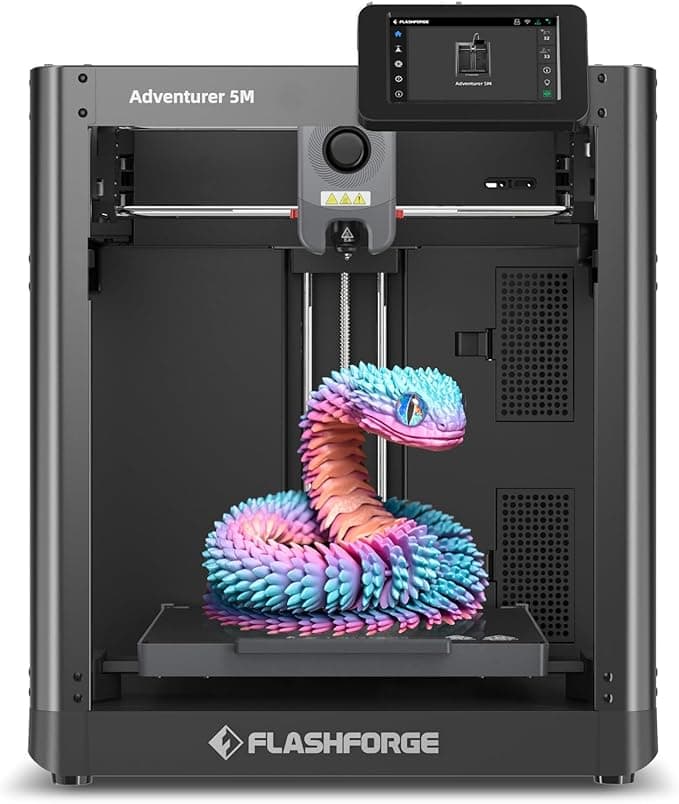
FLASHFORGE Adventurer 5M 3D Printer with 600mm/s CoreXY Speed and Fully Auto Leveling
Runner Up
4.1(2,209)

The Adventurer 5M showcases impressive engineering with its CoreXY all-metal structure delivering 600 mm/s travel speeds and 20,000 mm/s² acceleration—though as noted in our buying guide, real-world quality printing typically occurs at more moderate speeds. Its 280°C direct extruder with 3-second detachable nozzle swaps addresses one of FDM printing's biggest pain points, while the high-flow 32 mm³/s nozzle and 35-second warm-up reduce job start times significantly. The Flash Maker mobile app provides real-time monitoring, and it scored well on value despite not reaching the A1 Mini's exceptional price-performance ratio.

Best for: Makers who prioritize speed and want professional CoreXY motion with convenient nozzle swapping
CoreXY all-metal structure with 600 mm/s travel speed and 20,000 mm/s² acceleration capability
Quick 3-second detachable nozzle system enables rapid color changes and maintenance
High-flow 32 mm³/s nozzle with 35-second warm-up minimizes wait times between prints
280°C nozzle temperature limits advanced material compatibility compared to higher-end models
Speed claims may not translate to real-world quality printing at maximum rates
Vibration compensation may not fully address artifacts at highest acceleration settings

Score Breakdown

Rating
78
Popularity
100
Value
90
Features
75
Recency
0
#3
88

Score

Creality Ender 3 V3 SE 3D Printer Bundle with 4-Pack PLA Filament
Great Pick
4.9(13)

This Ender 3 V3 SE bundle represents significant evolution from earlier Ender models, with 250 mm/s top speed and 2500 mm/s² acceleration that Creality claims saves 73% time versus older versions. The Sprite full-metal dual-gear direct extruder handles flexible filaments like TPU alongside standard PLA and PETG, while CR Touch auto-leveling eliminates the manual bed-leveling frustrations that plagued earlier Ender generations. The dual Z-axis lead screws and Y-axis dual 8mm linear shafts address stability issues, and the included 4-roll PLA filament bundle provides immediate printing capability despite receiving a lower value score due to recent market entry.

Best for: Newcomers to 3D printing who want a reliable starter setup with included filament and modern auto-leveling
Sprite dual-gear direct extruder handles flexible TPU filaments alongside standard materials
CR Touch auto-leveling with strain sensor eliminates manual bed-leveling frustrations
Bundle includes 4 PLA filament rolls in multiple colors for immediate project starts
Limited temperature range restricts advanced material compatibility
Newer model with smaller reviewer base compared to established alternatives
Open-frame design lacks temperature control for warping-prone materials like ABS

Score Breakdown

Rating
98
Popularity
34
Value
80
Features
75
Recency
0
#4
88

Score

ANYCUBIC Photon Mono 4 Ultra 10K Resin 3D Printer with COB Light Source and 7" HD Mono Screen
4.6(123)

The Photon Mono 4 Ultra demonstrates why resin printing excels for detail work, with its 10K mono LCD delivering 17x17μm XY resolution that FDM simply cannot match. At 120 mm/h printing speed with intelligent release algorithms, it addresses resin printing's traditionally slow pace, while COB light source with Fresnel lenses provides ≥90% light uniformity for consistent layer exposure. The 5 intelligent inspection systems including residual resin detection help prevent the messy failures that plague cheaper resin printers, though it received a lower value score reflecting resin printing's higher consumable costs and specialized workflow requirements.

Best for: Miniature painters, jewelry designers, and detail-oriented makers who need ultra-fine resolution that FDM cannot achieve
10K mono LCD with 17x17μm XY resolution delivers exceptional detail for miniatures and jewelry
120 mm/h fast resin printing with intelligent release algorithm reduces typical resin printing delays
5 intelligent inspection systems including residual resin detection prevent costly print failures
Requires toxic resin handling with proper ventilation and safety equipment
Higher ongoing costs for resin consumables compared to FDM filament printing
Messy post-processing with washing and curing steps adds complexity to workflow

Score Breakdown

Rating
90
Popularity
63
Value
70
Features
75
Recency
0
#5
87

Score

Creality K2 SE 3D Printer with 500mm/s Speed, Solid Metal CoreXY Build, and CFS Multi-Color Support
4.1(1,594)

The K2 SE exemplifies proper CoreXY implementation with its die-cast aluminum frame and corner gussets providing the rigidity necessary for its 500 mm/s speeds and 20,000 mm/s² acceleration. Active vibration shaping technology helps maintain print quality at high speeds, while compatibility with Creality's CFS multicolor system expands creative possibilities beyond single-color prints. The modular direct drive extruder with quick-swap nozzles and hardened-steel dual-drive gears handles various filament types, though it scored lower on value reflecting its position in the competitive mid-range segment where premium features come at higher cost.

Best for: Experienced makers who want professional CoreXY performance with potential for multi-color expansion
Die-cast aluminum frame with corner gussets provides exceptional rigidity for high-speed printing
Active vibration shaping maintains print quality even at maximum 500 mm/s speeds
Compatible with Creality CFS multicolor system for automatic filament switching capabilities
CFS multicolor system requires separate purchase, adding significant cost to multi-material printing
Mid-range pricing without standout features compared to similarly-priced alternatives
Complex CoreXY mechanics may require more technical knowledge for troubleshooting

Score Breakdown

Rating
78
Popularity
96
Value
60
Features
75
Recency
0
#6
85

Score

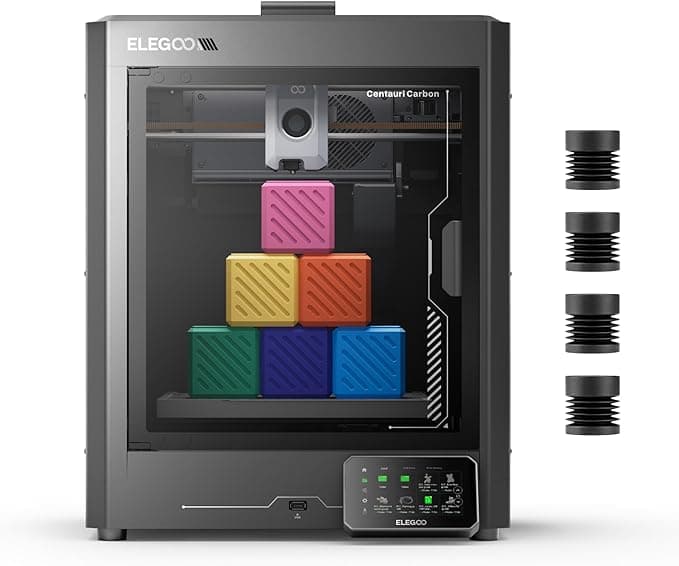
ELEGOO Centauri Carbon CoreXY 3D Printer with 320°C Nozzle, Auto Calibration, and Built-in Camera
4.2(723)

The Centauri Carbon stands out with its 320°C brass-hardened steel nozzle that unlocks carbon-fiber-reinforced filaments and engineering polymers that most desktop printers cannot handle. Its enclosed chamber design maintains the consistent temperatures crucial for advanced materials like ABS and ASA, while the pre-assembled, pre-calibrated delivery promises true out-of-box printing. The built-in chamber camera with dual LED lighting enables time-lapse creation and remote monitoring, though it received our lowest value score reflecting premium pricing for features that may exceed typical hobbyist needs.

Best for: Advanced users printing engineering materials and carbon-fiber reinforced filaments requiring high-temperature capabilities
320°C brass-hardened steel nozzle handles carbon-fiber reinforced and engineering materials
Fully enclosed chamber maintains consistent temperatures for advanced filament printing
Ships pre-assembled and pre-calibrated for immediate out-of-box printing capability
Premium pricing puts it at the high end of desktop printer market
High-temperature capabilities may be unnecessary for typical PLA and PETG projects
Enclosed design reduces accessibility for mid-print adjustments compared to open-frame alternatives

Score Breakdown

Rating
80
Popularity
86
Value
50
Features
75
Recency
0
#7
84

Score

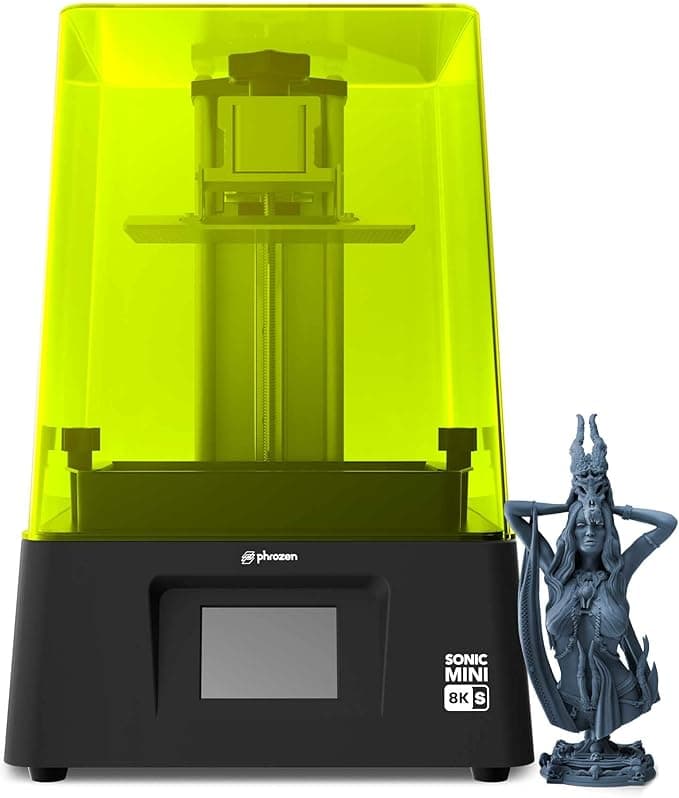
Phrozen Sonic Mini 8K S Tabletop LCD Resin 3D Printer with 22µm XY Resolution
4.6(144)

The Sonic Mini 8K S targets the tabletop miniature market with its 7.1-inch 8K monochrome LCD providing 22-micron XY resolution perfect for fine gaming pieces and jewelry work. Its compact 165 x 72 x 170mm print volume focuses on detail over size, while open-source compatibility with Lychee, Chitubox, and Tango slicers provides workflow flexibility that proprietary systems cannot match. The 22 lb load capacity handles taller display models despite the small footprint, though it earned a lower value score as specialized resin printers face intense competition in the detail-printing segment.

Best for: Tabletop gamers and jewelry makers who need ultra-fine detail in a compact, beginner-friendly resin printer
7.1-inch 8K LCD with 22-micron XY resolution excels at miniature and jewelry detail work
Compact tabletop footprint fits easily into small workshops or hobby spaces
Open-source slicer compatibility provides workflow flexibility with Lychee, Chitubox, and Tango
Small 165 x 72 x 170mm print volume severely limits project size options
Resin printing requires ventilation, safety equipment, and messy post-processing workflows
Specialized focus on miniatures may not justify cost for general-purpose 3D printing needs

Score Breakdown

Rating
90
Popularity
65
Value
40
Features
75
Recency
0
#8
83

Score

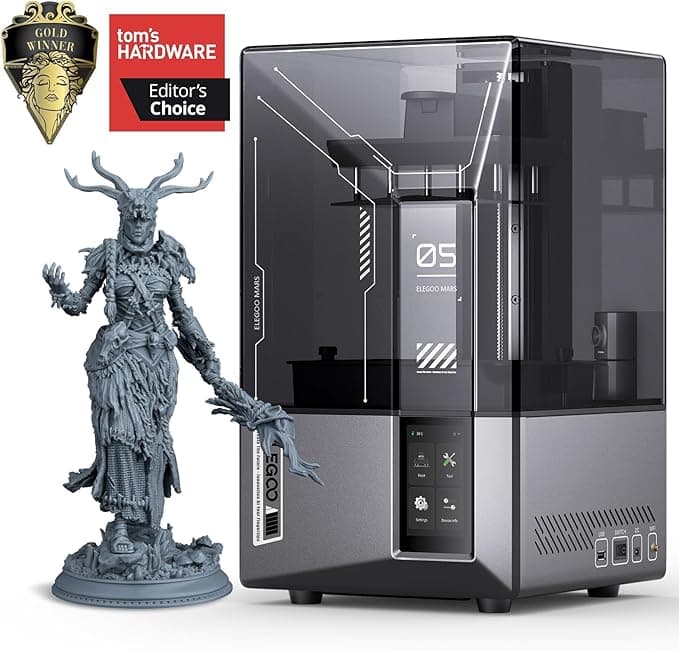
ELEGOO Mars 5 Ultra 7" 9K MSLA Resin 3D Printer with AI Camera and Auto-Leveling
4.6(64)

The Mars 5 Ultra pushes resin printing boundaries with its 9K LCD at 8520x4320 resolution delivering 18x18μm XY precision for incredibly fine details. Its 150 mm/h printing speed with tilting release technology addresses resin printing's time constraints, while the built-in AI camera provides warping detection and remote monitoring capabilities typically found in much more expensive systems. Wi-Fi connectivity supports both 2.4G and 5G networks plus cluster printing across multiple machines, though it received a lower value score as advanced features come at premium pricing in the competitive resin printer market.

Best for: Professional makers and small production runs requiring the finest possible resin print detail with AI monitoring
9K LCD with 18x18μm XY precision delivers exceptional detail rivaling professional resin systems
Built-in AI camera detects warping issues and enables remote monitoring with time-lapse capability
Wi-Fi cluster printing allows coordinated production runs across multiple Mars 5 Ultra units
Premium pricing reflects advanced features that may exceed typical hobbyist requirements
Resin printing workflow remains messy with toxic materials requiring proper safety protocols
AI monitoring features require stable Wi-Fi connection and may have learning curve for new users

Score Breakdown

Rating
90
Popularity
54
Value
40
Features
75
Recency
0
#9
81

Score

Bambu Lab P1S Fully Enclosed CoreXY 3D Printer with 16-Color Multi-Material Support
4.5(181)

The P1S exemplifies why enclosed chambers matter for advanced materials, maintaining consistent temperatures crucial for ABS and ASA printing while its CoreXY motion system delivers 500 mm/s speeds with 20,000 mm/s² acceleration. Support for up to 16 colors through the optional AMS system transforms it into a multi-material powerhouse, while broad filament compatibility spans PLA through engineering plastics like PA and PC. The 15-minute setup process makes professional-grade features accessible, though it earned the lowest value score in our ranking as premium Bambu Lab pricing targets serious makers rather than budget-conscious beginners.

Best for: Serious makers printing advanced materials who want professional multi-color capability in an enclosed system
Fully enclosed chamber enables consistent printing with temperature-sensitive materials like ABS and ASA
Up to 16-color printing capability with optional AMS system for complex multi-material projects
Broad filament compatibility includes engineering plastics like PA and PC alongside standard materials
Premium pricing puts it among the most expensive options in our desktop printer lineup
AMS multi-color system requires separate purchase, significantly increasing total system cost
Enclosed design may feel restrictive for users accustomed to open-frame printer accessibility

Score Breakdown

Rating
88
Popularity
68
Value
20
Features
75
Recency
0
#10
80

Score

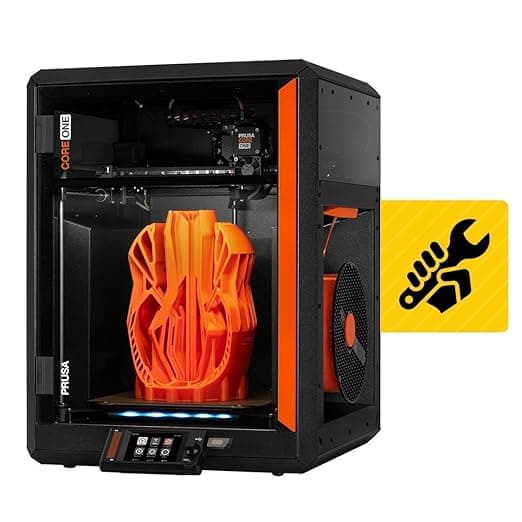
Original Prusa CORE One Enclosed CoreXY 3D Printer DIY Kit with Active Chamber Heating
4.8(34)

The CORE One represents Prusa's transition to CoreXY with active chamber heating up to 55°C that enables consistent printing of engineering materials like Nylon and PC that typically warp on open-frame printers. Its all-steel exoskeleton frame provides the rigidity necessary for precision printing across the large 250x220x270mm build volume, while the enclosed design allows door-closed printing even with challenging materials. As a DIY kit with lifetime technical support and 24-hour professional service, it targets makers who value build quality and manufacturer backing, though it received our lowest value score reflecting Prusa's premium positioning in an increasingly competitive market.

Best for: Experienced builders who want premium engineering and manufacturer support for professional-grade enclosed printing
Active chamber heating up to 55°C enables consistent printing of advanced materials like Nylon and PC
All-steel exoskeleton CoreXY frame provides exceptional rigidity across large 250x220x270mm build volume
Lifetime technical support with 24-hour professional customer service from established manufacturer Prusa Research
Premium pricing makes it the most expensive option in our desktop printer comparison
DIY kit assembly may intimidate users who prefer pre-built, ready-to-print solutions
High cost may not be justified for typical hobbyist projects using standard PLA and PETG materials

Score Breakdown

Rating
95
Popularity
46
Value
10
Features
75
Recency
0