Nobody plans to be late for work with a hungry cat staring them down, or to come home from a long weekend to find the dog food bowl empty since Saturday morning — and that gap between your schedule and your pet's is exactly what an automatic feeder is built to close. The category ranges from simple gravity hoppers that need no power at all up to camera-equipped smart feeders that let you watch, talk to, and individually identify each pet at mealtime, and matching the right tier to your actual needs matters more than chasing the most features.
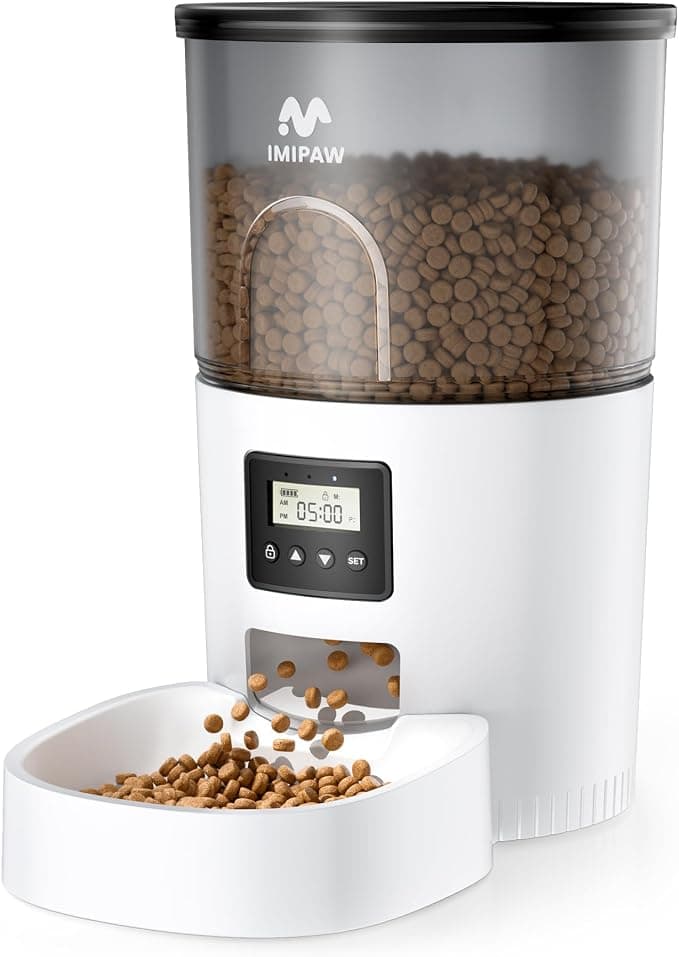
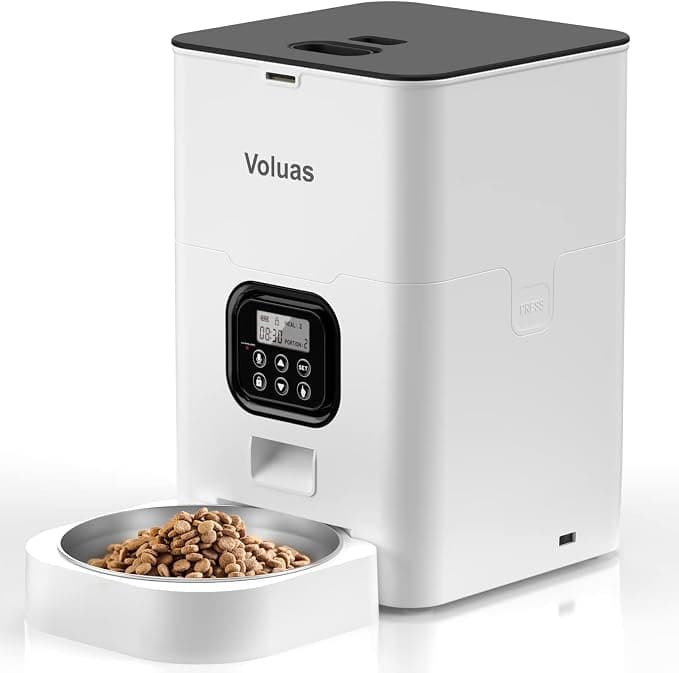
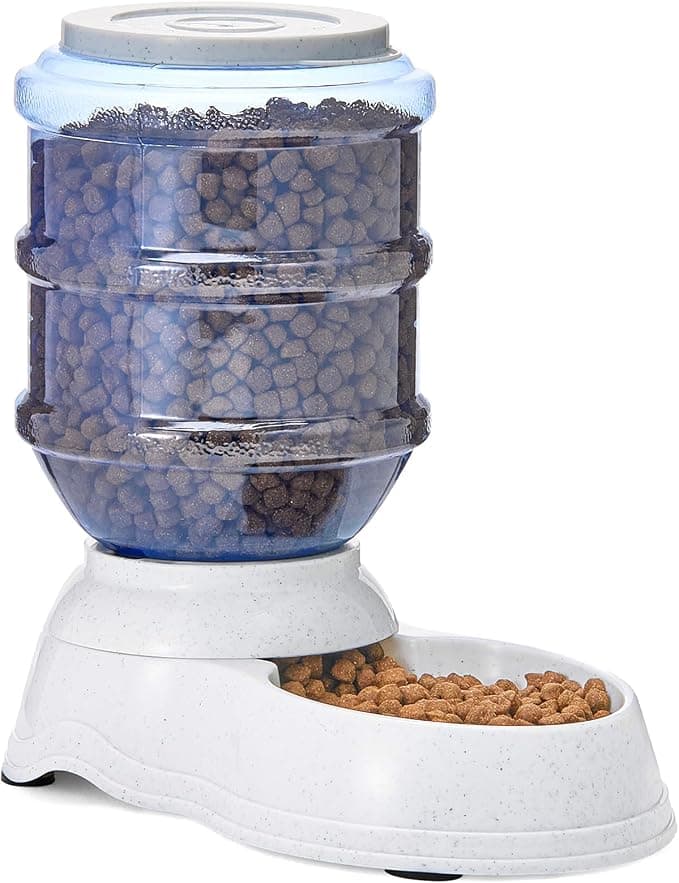
Hopper capacity and how many days it lasts between refills is the first practical question. A basic gravity feeder, like the Amazon Basics Gravity Pet Food Feeder, holds a fixed volume with no scheduling at all — food is simply always available, which works for cats who self-regulate but invites overeating in food-motivated dogs. Timed dispensers with a 3-4 liter hopper, such as the IMIPAW and VOLUAS models, add programmable meal times and portion control, typically lasting a week or more between refills depending on how many pets you're feeding.
Portion accuracy and schedule flexibility separate the mid-tier feeders from each other. Look at how many meals per day a unit supports and how granular the portion increments are — a feeder that only offers 1-4 meals with coarse portion steps works fine for one adult cat, but a multi-cat or multi-meal household benefits from something offering 6 or more scheduled meals with finer control, like the PETLIBRO Automatic Cat Feeder. Voice recording features that play a calling message at mealtime are a small but genuinely appreciated touch across nearly every model in this category now.
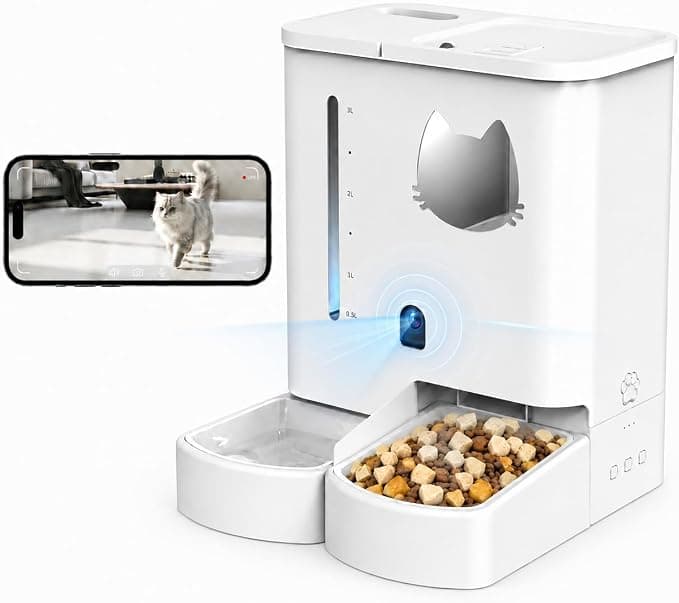
App connectivity and cameras mark the top tier, and they solve a real problem: peace of mind when you're not home. Camera-equipped feeders, including the PETKIT Automatic Cat Dog Feeder and the Yuno AI Smart Feeder, let you watch feeding in real time, talk to your pet through two-way audio, and in some cases get AI-curated highlights of your pet's day. For multi-pet households specifically, RFID-based feeders that recognize an individual pet's collar tag — a feature the PETLIBRO RFID Automatic Cat Feeder builds its whole design around — solve the food-stealing problem that plagues households with one food-motivated pet and one that needs a restricted diet.
The mistake buyers make most often is underestimating battery backup importance. A feeder that loses power during a work trip and has no battery fallback means your pet goes unfed until you're home to notice, which defeats the entire purpose of buying one. Look specifically for dual power support — most serious feeders pair a wall adapter with D-cell battery backup lasting weeks to months. The second common mistake is ignoring food compatibility: not every hopper handles larger kibble sizes or moist treats well, and an anti-jam design is worth checking for if your pet's food isn't small, uniform dry kibble.
We scored every feeder here on a weighted composite of customer ratings, review volume, price-to-capacity value, and feature richness relative to the rest of the field. Simple, reliable feeders score well for nailing the basics without unnecessary complexity; premium camera and app-connected models earn their place by adding real peace-of-mind features for owners who travel or work long hours. Below, we break down all eleven, starting with the pick that balanced reliability, capacity, and value best across the board.