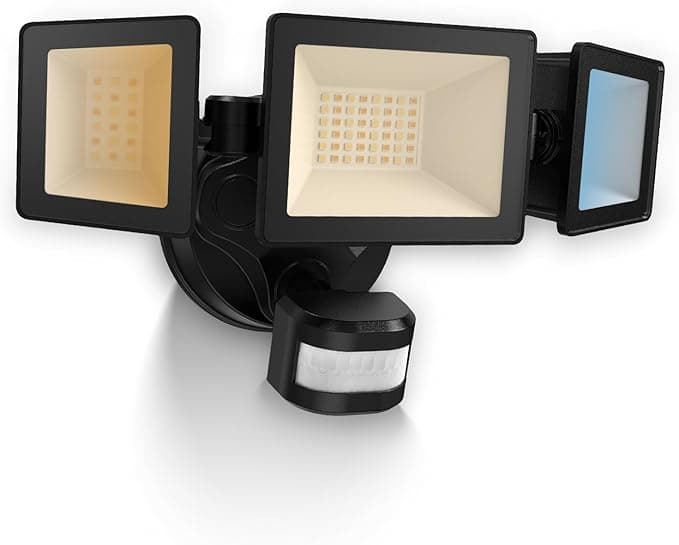
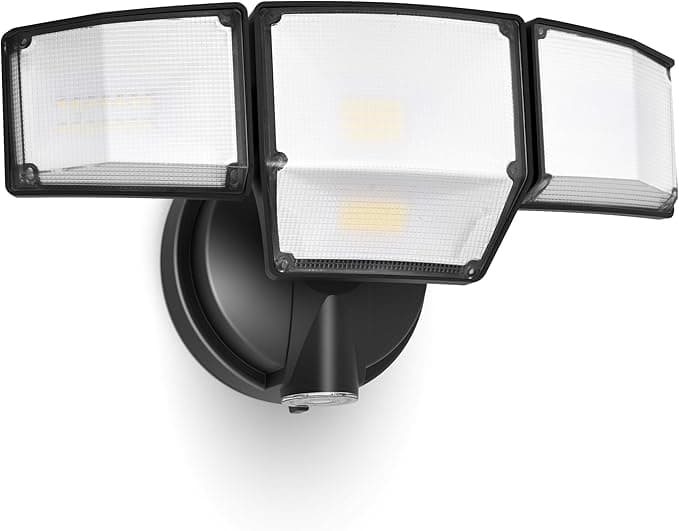
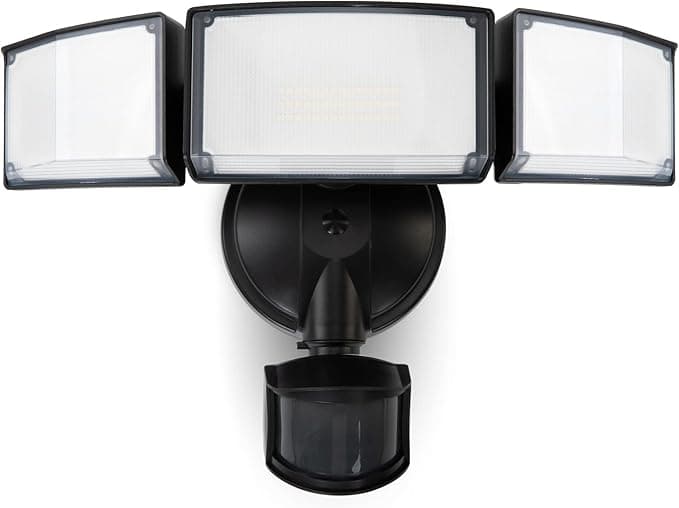
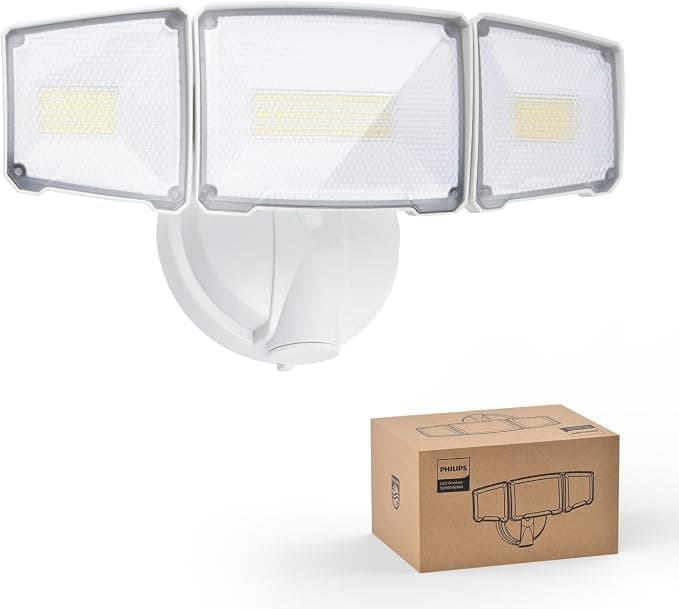
Outdoor flood lights come down to three decisions that determine whether you'll be happy for a decade or replacing hardware next year: what triggers the light on, how bright you actually need, and how you're going to power it. Nail those three and you'll get the security lighting you want without over-buying or ending up with something that dies in the first freeze.
What triggers the light matters more than raw brightness. Every flood light in this lineup falls into one of four control modes:
- Switch-controlled (like the Philips 72W, Onforu 75W, LEPOWER 28W, and Olafus 130W) turns on and off via a wall switch — you're in full manual control. Best for porches you want lit for parties, work sheds, or areas where motion-triggering would be annoying (say, a driveway that faces a road with passing cars).
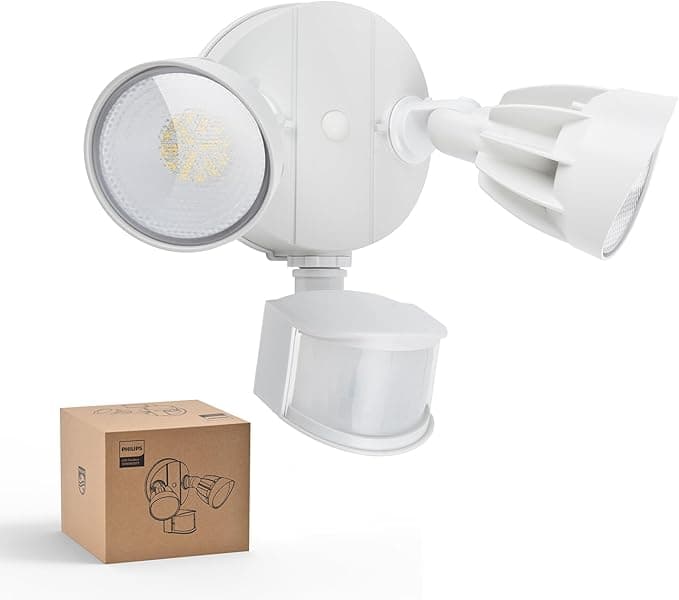
- Motion-activated (like the Philips 44W PIR, LUTEC 72W motion, and Lithonia HomeGuard) triggers via PIR sensor within a detection range and stays on for an adjustable timer. Best for security around entry doors, side yards, and any spot where you want brief illumination on activity — not baseline lighting.
- Dusk-to-dawn photocell (like the Onforu 80W dusk-to-dawn and LUTEC 80W dusk-to-dawn) auto-activates at dusk and auto-deactivates at dawn via a light sensor. Best for parking areas, business exteriors, or spots where consistent overnight lighting matters more than triggered response.
- Hybrid multi-mode (like the ALUSSO 40W) offers 2-4 modes selectable via switch: dusk-to-dawn, motion, or on-time manual. Best for households that want flexibility to change modes seasonally.
Brightness (lumens) is where marketing gets misleading. Manufacturer wattage claims are frequently exaggerated — the real spec is lumens output at the marketed color temperature. Rule of thumb: 3,000-4,500 lumens is right for porches, side yards, and single-door coverage. 7,000-9,000 lumens is right for driveways, backyards, and multi-purpose security lighting. 13,000+ lumens (like the Olafus 130W) is genuine floodlight-tier brightness — bright enough to light up a large yard or business exterior, but overkill for most residential porch scenarios. Over-buying wattage costs you more up front and creates uncomfortable glare in tight spaces.
Power source and install method matter equally. Every pick in this lineup is hardwired 120V AC to a junction box — no plug-in cords, no solar panels, no batteries. This means you need existing electrical wiring or must install a junction box before mounting. Hardwired = full-brightness reliable lighting that doesn't degrade in cloudy weather; but it requires either an electrician or comfort with basic electrical work. If you don't have wiring in the target location, either pay an electrician (typically $150-300 per fixture install), or check our outdoor solar lights page for cordless options.
A few overlooked specifics that separate a flood light you'll use for a decade from one you'll replace next year:
IP65 waterproofing is the minimum for year-round outdoor mounting. IP65 handles rain, snow, and hose water without ingress issues. IP66 (LEPOWER 28W) adds resistance to higher-pressure water — matters for spots directly under gutters or downspouts. Anything below IP65 will fail in the first winter.
Color temperature (K) determines mood and visibility. 3000K warm white is soft and inviting — right for entertainment spaces where you don't want harsh light. 4000K natural white is a balanced compromise. 5000K daylight is bright, crisp, and best for security and task lighting (garages, work areas). 6500K cool daylight is the brightest and most alerting — best for pure-security applications but harsh on the eyes at close range. Match to the use case, not to what the marketing highlights.
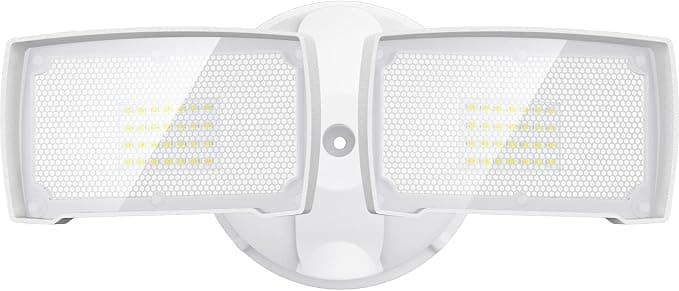
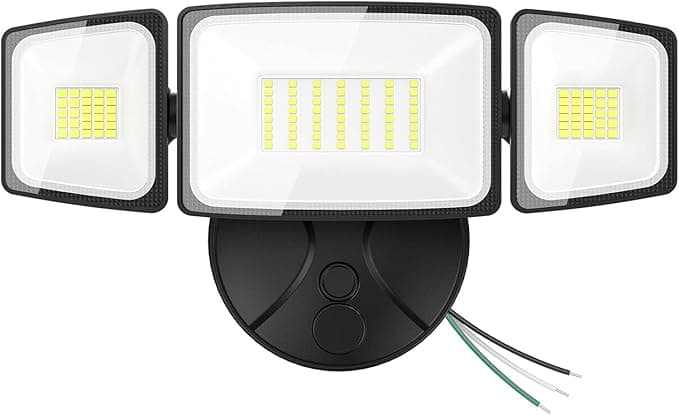
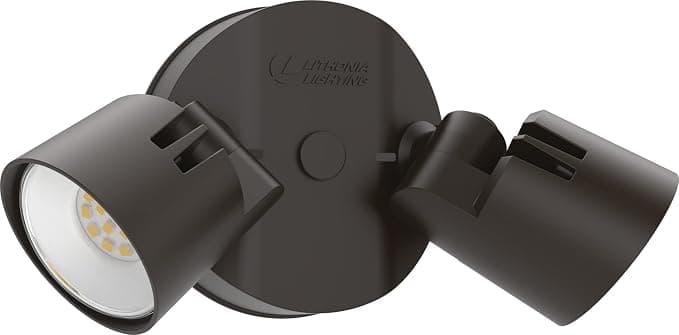
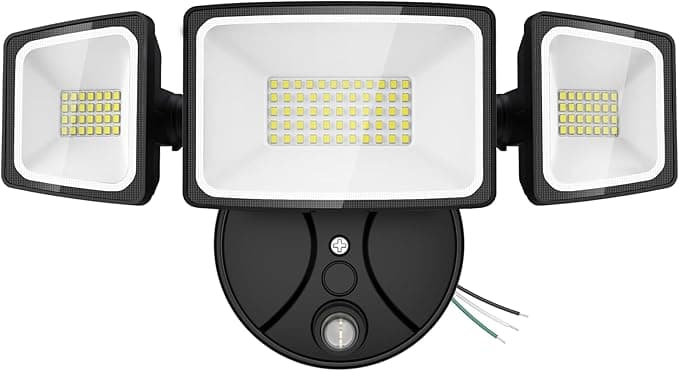
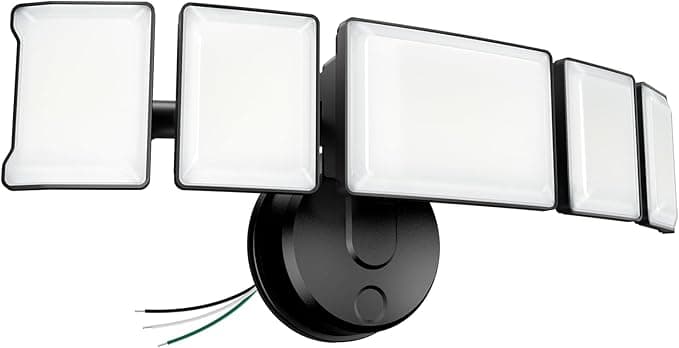
Multi-head vs single-head design determines coverage. 2-head designs (LEPOWER, Philips 44W, Lithonia) give you left/right or up/down angle flexibility. 3-head designs (Philips 72W, Onforu 75W, Onforu 80W, LUTEC 72W motion) add a center head for wider coverage. 4-head and 5-head designs (LUTEC 80W, Olafus 130W) are for genuinely wide-area coverage — driveway plus front yard, or full backyard illumination. Buy heads based on how many distinct directions you need to point light in.
Motion sensor specs deserve real attention if you're buying motion-activated. Detection range (typically 20-70 ft) determines how far someone can be from the fixture and still trigger it. Detection angle (typically 120-180 degrees) determines the sweep coverage. Sensitivity adjustment matters — a fixed sensor without adjustment will either trigger on every passing cat or miss actual foot traffic depending on install location. The ALUSSO 40W's 1-40 ft adjustable range and 10sec-10min duration is the honest gold-standard for motion sensor flexibility in this lineup.
Bulb replaceability is dying. Every flood light in this lineup uses integrated LEDs — the entire fixture is disposable when the LEDs die (typically 50,000+ hours = 15-20 years of nightly 4-hour use). This is fine for LED lifespan but means you cannot swap in different bulbs. Verify the manufacturer's warranty covers the LED module before buying — some 5-year warranties on this list (Lithonia, ALUSSO) genuinely cover LED failure; others do not.
The scoring methodology weighs customer rating heavily, then balances reviewer volume, value, and feature density. The Lithonia HomeGuard ranks first because it combines the lowest total price, a strong customer rating, and trade-brand credentials (UL/cUL wet listed, 5-year warranty) — the honest value-per-dollar peak of the lineup for a compact 2-head motion-activated security light. For maximum brightness, the Olafus 130W (13,000 lumens, 5 heads) is the honest brightest pick despite ranking last on composite. For deepest reviewer trust, the LEPOWER 28W (6,600+ reviews at 4.7 stars) is the proven volume pick at compact size. For premium brand name in switch-controlled 3-head, Philips 72W is the honest answer. Read the individual summaries and match the three decisions above to your specific installation.