Winter dry air cracks your skin, wakes you up with a scratchy throat, and turns a nursery into a place you worry about instead of relax in — and a humidifier is the cheapest fix that actually works, as long as you buy the right kind for the room you're actually trying to fix. The category spans compact tank models built for one bedroom up to serious multi-day units meant for open living spaces, and getting that match wrong is the single most common humidifier complaint.
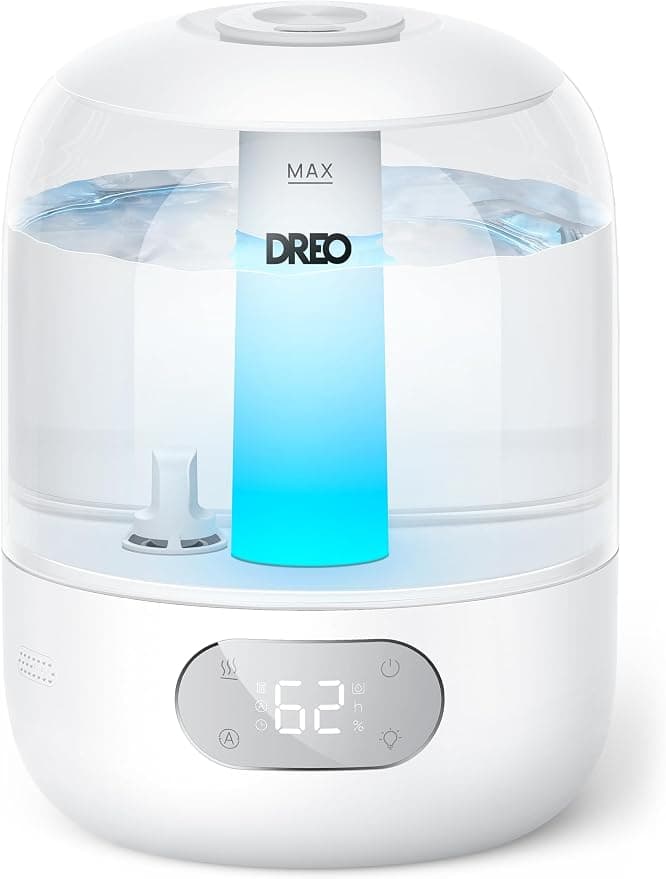
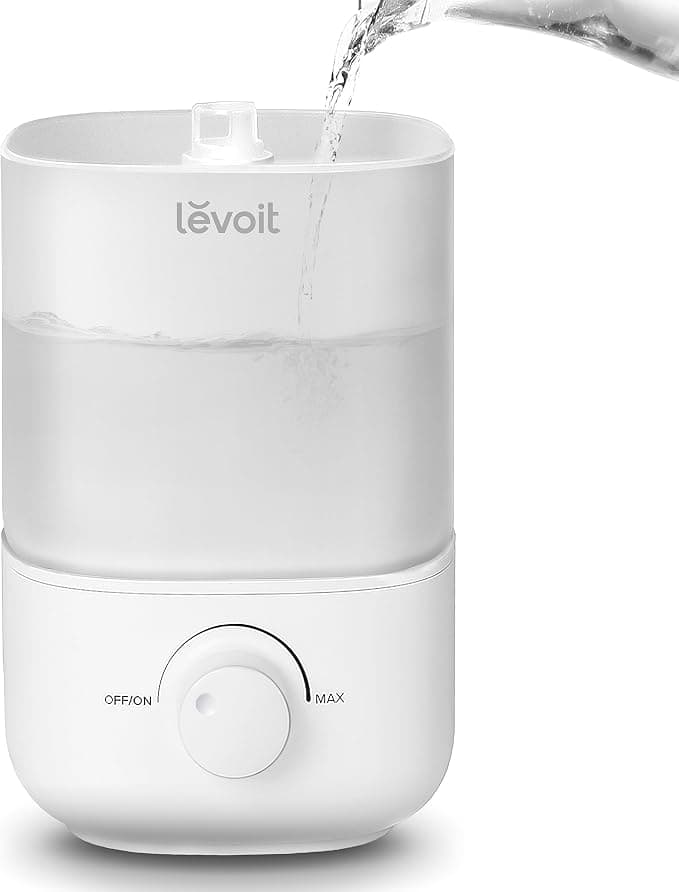
Mist type is the first real fork in the road. Cool mist evaporative and ultrasonic humidifiers, like the Levoit Top Fill and DREO 3L, are the safer default for homes with kids or pets since there's no hot surface involved, and ultrasonic models in particular run near-silent. Warm mist steam units, such as the Vicks Warm Mist Humidifier and the stainless steel TURBRO vaporizer, heat water before releasing it, which some people find soothing for congestion and which naturally kills more bacteria in the tank — at the cost of a warm surface and slightly higher running noise. Neither type is objectively better; it comes down to who's in the room and what symptoms you're treating.
Tank capacity and coverage area decide how often you're refilling. A 2-3 liter tank suits a single bedroom and typically runs 20-30 hours before needing a refill, while larger 6L-plus tanks, like the one on the Levoit 6.2L, can cover a bigger living space or stretch multiple nights without a midnight top-off. Match the rated square footage to your actual room — undersizing means the air never reaches a comfortable humidity, and oversizing for a small bedroom risks pushing past the ideal range and inviting mold or that clammy feeling on walls and windows.
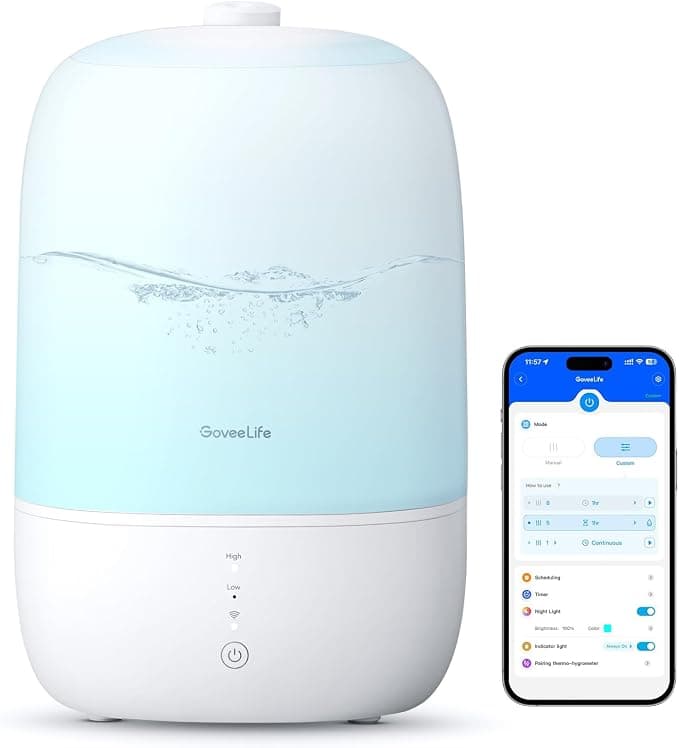
Auto-humidistat control is worth paying attention to, because a humidifier that just runs at full blast until the tank empties can overshoot the 40-60% humidity range experts recommend. Models with a built-in sensor, like the GoveeLife Smart Humidifier, hold a target percentage automatically and shut off or throttle back once they hit it, which protects both your health and your walls. Noise level matters more than the spec sheet suggests too — a unit rated in the mid-20s dB is genuinely silent for sleep, while anything above 35dB becomes a background hum you'll notice by night three.
The mistake buyers make most often is picking based on tank size alone and ignoring cleaning difficulty. A humidifier that's a hassle to clean gets cleaned less often, and mineral buildup or bacterial growth in a neglected tank can actually make indoor air worse, not better. Top-fill designs with wide tank openings, easy-to-reach interiors, and detachable bases are worth the modest price premium over bottom-fill models that require flipping the whole tank over. Filter-free designs also cut down on ongoing cost, since you're never buying replacement cartridges.
We scored every humidifier here on a weighted composite of customer ratings, review volume, price-to-capacity value, and how feature-rich the unit is relative to the rest of the field. Simple, well-executed models score well for delivering reliable moisture without complexity; premium picks earn their place with auto-humidity sensing, app control, or genuinely quiet operation. Below, we break down all eleven, starting with the pick that balanced coverage, ease of use, and value best across the board.