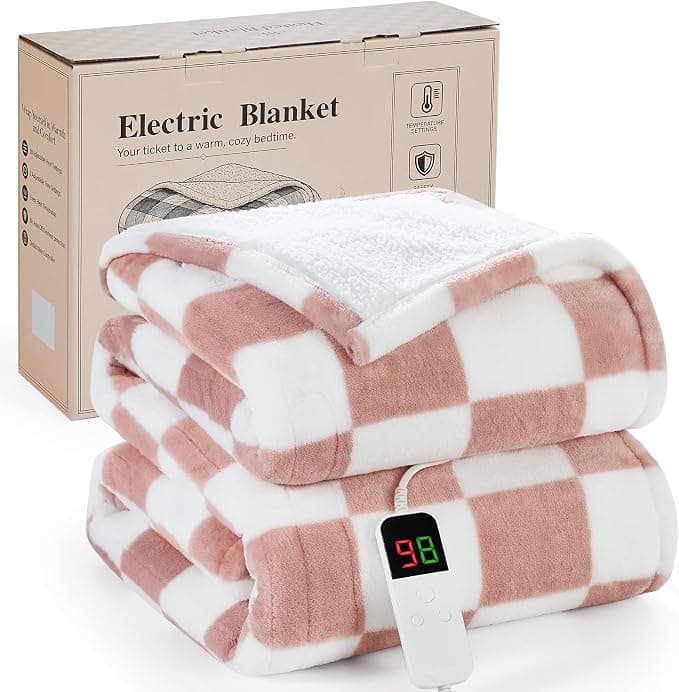
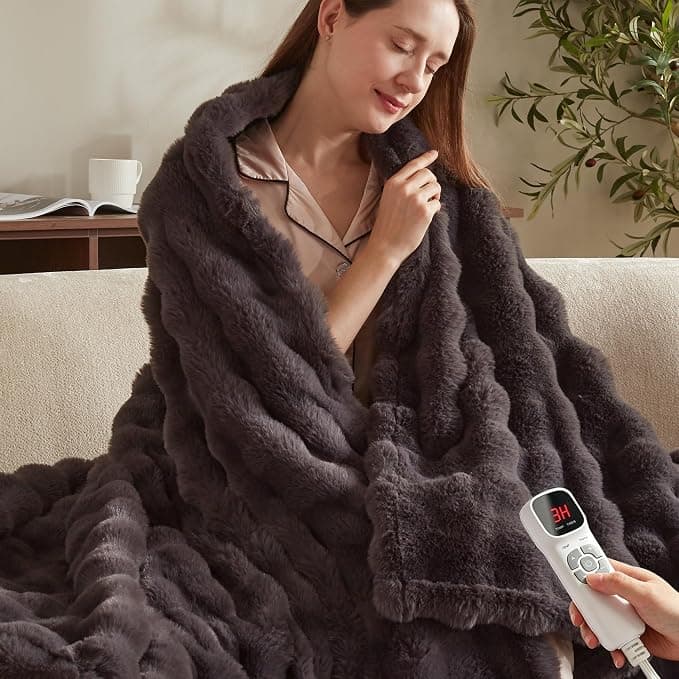
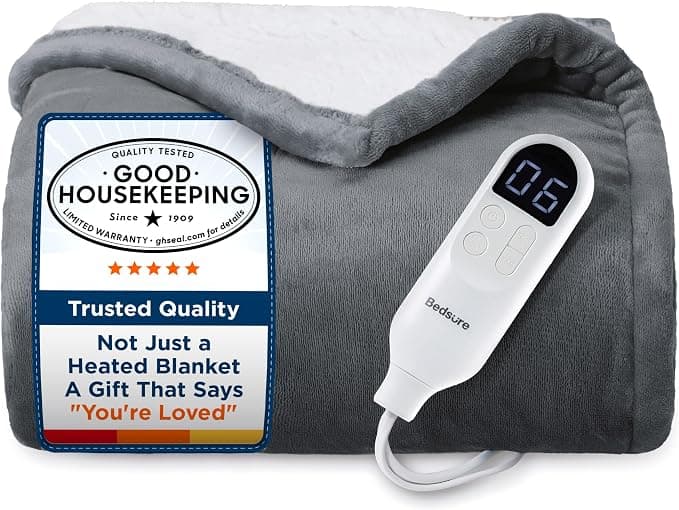
Turning the thermostat up two degrees to warm the whole house costs real money over a winter; running a heated blanket for the one person actually feeling cold costs pennies a night. That's the entire case for this category, and it's why heated blankets have quietly become one of the most popular cold-weather purchases — not as a novelty, but as a genuinely cheaper way to stay warm than heating rooms nobody's sitting in.
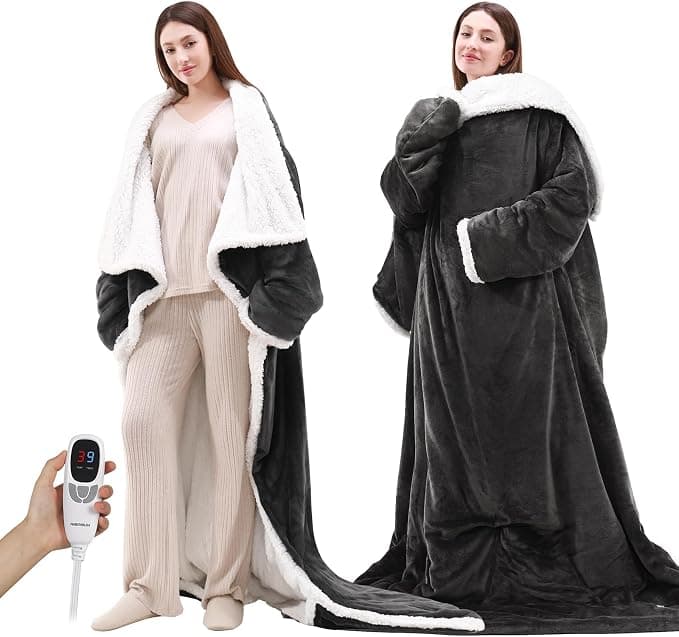
The first real decision is form factor. Wearable heated blankets, like the Bedsure Wearable Heated Blanket and models from Sealy and Westinghouse, add sleeves and a foot pocket so you can walk around the house with it on, hands free — genuinely useful if you're cooking, reading, or just don't want to be pinned to the couch. Flat throw blankets skip the sleeves for a more traditional lap-blanket feel and tend to run cheaper. Full-bed-size heated blankets, sized for Twin through Queen, are built to actually replace or supplement your bedding rather than serve as a throw.
Heat settings and timer flexibility matter more than the raw number suggests. Look for at least 6 distinct heat levels so you can dial in exactly the right warmth rather than jumping between "too cold" and "too hot," and a timer with multiple auto-off windows — 2, 4, 6, 8, and 10 hours is common — so it won't run all night if you fall asleep before turning it off. A newer feature worth seeking out is preheat mode, found on blankets like the Bedsure Heated Blanket Throw with Preheat Function, which blasts full heat for the first couple hours to warm you up fast, then automatically drops to a lower maintenance setting.
Fabric and washability round out the practical concerns. Flannel-and-sherpa combinations are the standard for softness, with GSM (grams per square meter) as a rough proxy for plushness — higher numbers mean thicker, cozier material. Machine washability varies by model and matters if you want to actually keep the blanket clean over a season of daily use; always disconnect the controller first, since the heating wires themselves generally can't go in the wash even on washable models.
The mistake buyers make most often is assuming any 1500W space heater beats a heated blanket on value, without accounting for the fact that a blanket heats you directly rather than an entire room's worth of air. A heated blanket typically draws a small fraction of the power a space heater does, which adds up fast if you're using it nightly for months. The second common mistake is skipping certification — always confirm ETL or UL certification and built-in overheat protection before buying, since these are electrical devices you'll be wrapped in for hours at a time.
We scored every blanket here on a weighted composite of customer ratings, review volume, price-to-feature value, and how richly equipped each one is relative to the rest of the field. Budget throws score well when they deliver reliable warmth without excess; wearable and premium picks earn their place with preheat modes, more heat levels, or genuinely plush fabric. Below, we break down all eleven, starting with the pick that balanced warmth, safety, and value best across the board.