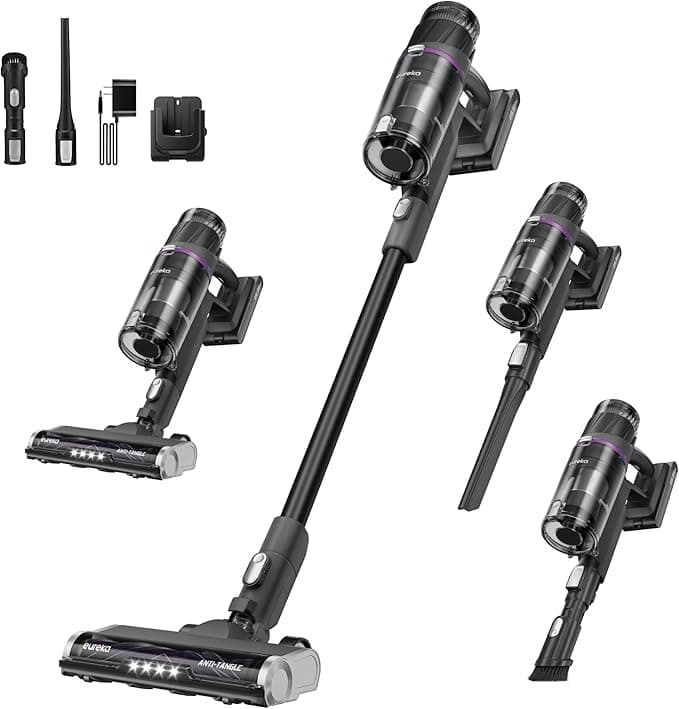
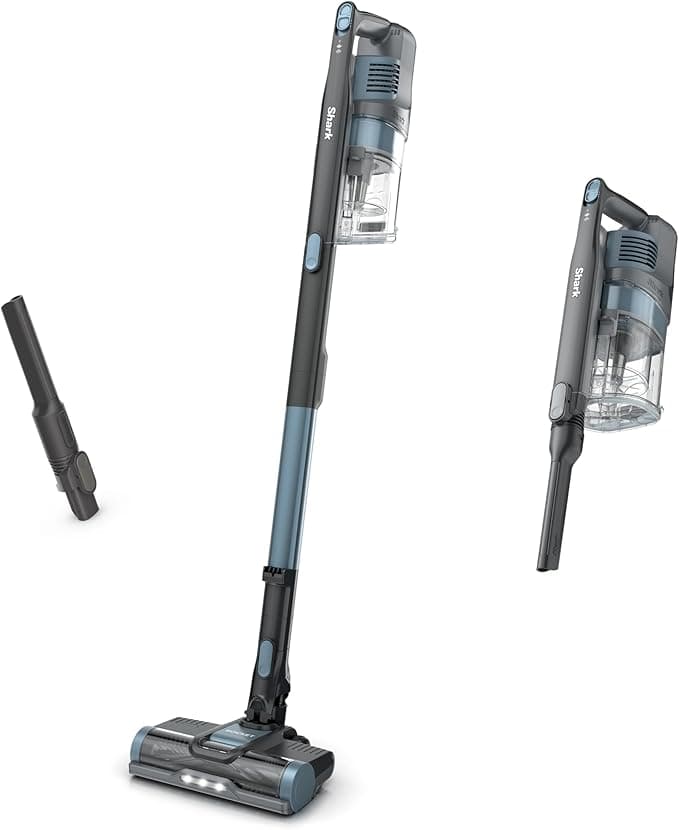
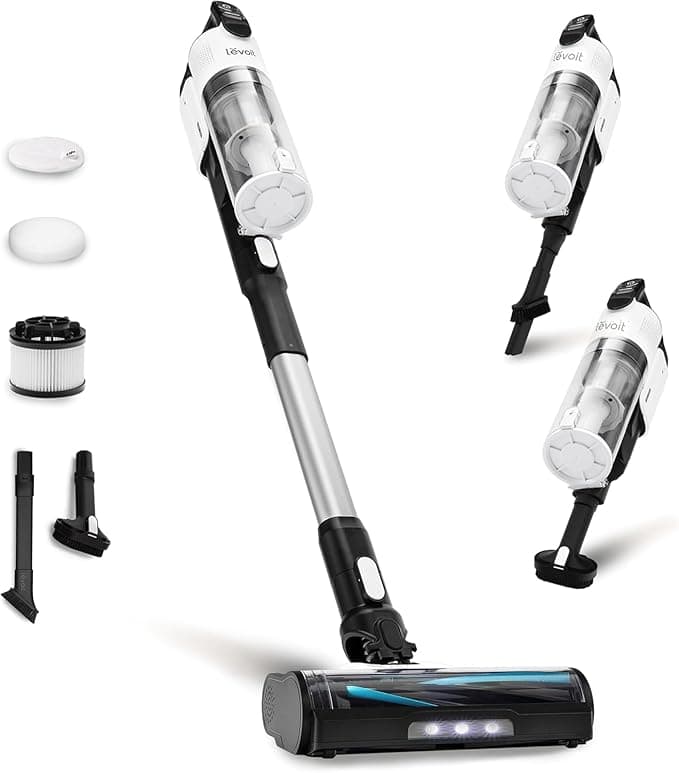
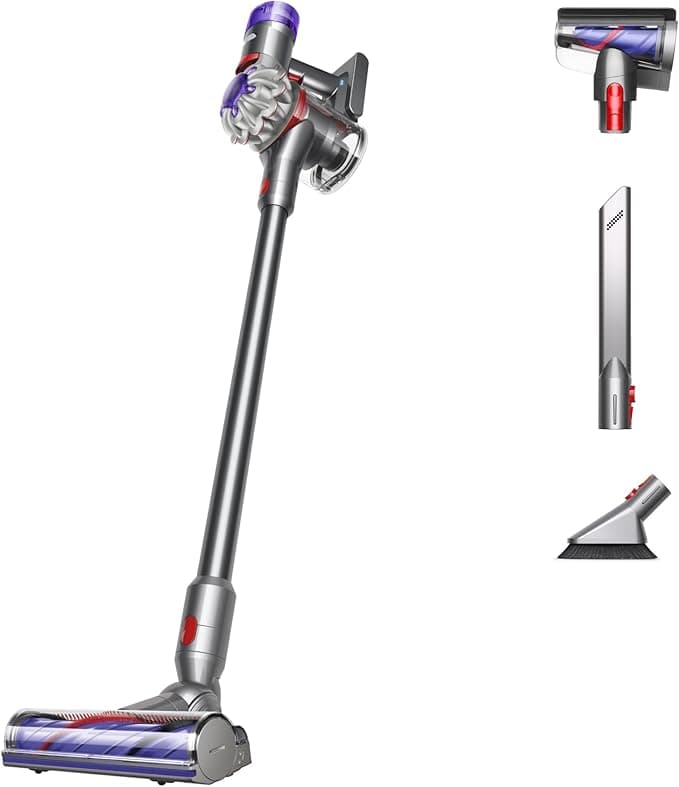
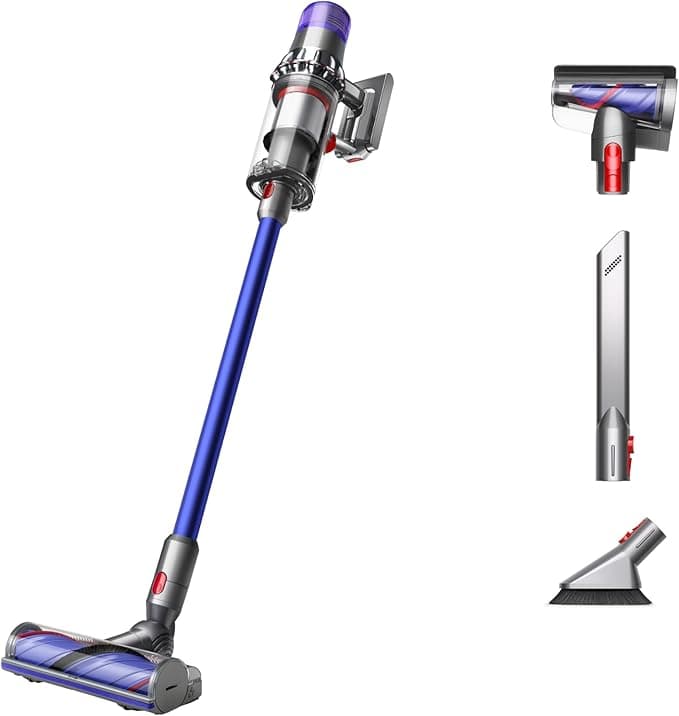
Cordless stick vacuums went mainstream because the trade-off finally tipped. Battery tech got good enough that you can vacuum a whole apartment on one charge, suction caught up to plug-in uprights for everyday cleaning, and the convenience of grabbing the vacuum off a wall dock instead of dragging out a corded behemoth ended the argument. Today, even budget cordless sticks outperform mid-range corded uprights from five years ago — but the gap between brands and price tiers is wider than the marketing copy suggests.
Suction power is the spec everyone fixates on, and the units make it confusing. Dyson reports in "AW" (Air Watts) — the Dyson V11 Origin hits 185 AW, the Dyson V8 Plus hits 115 AW. Shark, Eureka, LEVOIT and most other brands report watts (the Eureka ReactiSense 440 is 350W input wattage, which is roughly equivalent to ~150 AW output). Bottom line: anything above ~100 AW handles fine dust on carpet adequately, anything above 150 AW handles pet hair and embedded grit. Most homes don''t actually need the top spec.
Battery runtime is the other headline number, and it''s almost always best-case (Eco mode, no powered brush). A "60-minute" vacuum will give you 8-15 minutes on the highest power setting with the motorized floor head running. Two more honest things to ask: does the battery swap (most don''t — bad news when it dies after 2-3 years), and how long does it take to recharge (3-5 hours is typical, and that''s annoying when you''re mid-clean).
Brushroll design is where pet households should focus. "Anti-tangle" or "tangle-resistant" technology is a real feature now — both the LEVOIT LVAC-200 and the Eureka ReactiSense 440 use comb-strip designs that physically guide hair away from the bristle bar as it spins. Without it, you''ll be cutting hair off the brushroll with scissors every few cleanings. Dyson''s Motorbar cleaner head uses a different mechanism (angled tines) and works well, but it''s only on the V11 and up.
Weight and balance matter more than buyers expect. Stick vacuums concentrate the motor and battery near the top, which means they feel heavier than the spec suggests when you''re vacuuming overhead or stairs. The lighter end of our lineup (the Shark Pet Cordless at around 7.5 lbs) is genuinely easier on the wrist than the Dyson V11 (closer to 6.5 lbs but top-heavy). If anyone in the house has hand or wrist issues, weight balance is the first thing to test in-store.
The biggest mistake we see: buyers overspending on flagship Dysons for daily quick cleanups, then realizing the LEVOIT or Eureka would have done the job for one-third the price. The flip side: buyers cheaping out for a household with three pets and hardwood floors, then replacing the vacuum after a year of clogged brushrolls. Match the power tier to your actual mess level, not aspirational ones.
Our rankings combine rating (40%), review volume (15%), value relative to category (20%), feature density (20%), and recency (5%) into a single composite score. We don''t physically vacuum with these — we score them based on what real buyers report and what the spec sheets promise. Here are the five cordless stick vacuums worth your attention in 2026, from a budget tangle-resistant workhorse to the premium Dyson flagship.